Showing posts with label the Right. Show all posts

Political Polarization Is A Psychology Problem

Wednesday, May 30, 2018

This discord worries me as a psychologist, not only for the stress it causes, but because it smacks of a social psychology phenomenon known as “group polarization.” In group polarization, people who have different views become reactionary and disagree with one another in a knee jerk response because they have identified so strongly with their “team” or in group. Thus, they begin to automatically reject any ideas associated with the “opponent,” or the out group. This can create a vicious circle in which the more we dislike a certain group, the more negatively we judge whatever they have to say ― and the more negatively we judge their statements, the more we dislike them, and the more we dislike them, the more negatively we judge their statements. Round and round we go.

https://www.huffingtonpost.com/entry/political-polarization-is-a-psychology-problem_us_5a01dd9ee4b07eb5118255e5

The tyranny of polarization

Monday, November 6, 2017

http://conversationswithbillkristol.org/video/jonah-goldberg-iii/?start=1364&end=3945

@ time 44:00

polarization

Political Polarization

Thursday, October 26, 2017

Political Polarization
http://www.pewresearch.org/topics/political-polarization/

Media Bias & fake news

Saturday, June 17, 2017

How media literacy can help students discern fake news
https://www.youtube.com/watch?v=z4fwJHhv6ZY

How media literacy can help students discern fake news
http://www.pbs.org/newshour/bb/media-literacy-can-help-students-discern-fake-news/ 

Why conservatives might be more likely to fall for fake news
https://www.washingtonpost.com/news/wonk/wp/2016/12/07/why-conservatives-might-be-more-likely-to-fall-for-fake-news/?utm_term=.ac4ee464e053 

Why Fake News Targeted Trump Supporters
 https://www.theatlantic.com/science/archive/2017/02/why-fake-news-targeted-trump-supporters/515433/

Why 'fake news' is now ensnaring liberals
https://www.csmonitor.com/USA/Politics/2017/0207/Why-fake-news-is-now-ensnaring-liberals

Affluent and College-Educated Liberals Most Likely to Fall for the Left’s ‘Fake News’
 http://conservativetribune.com/60-minutes-who-falls-fake-news/

The rise of left-wing, anti-Trump fake news
 http://www.bbc.com/news/blogs-trending-39592010

Liberals Are Just as Guilty of Falling for Fake News as Conservatives

Fake news for liberals: misinformation starts to lean left under Trump 

The left's emerging 'fake news' problem
http://www.businessinsider.com/fake-news-left-liberal-problem-2016-12

Report: Anything That Challenges Your Worldview Is Fake News


iCivics- Media Literacy
https://www.icivics.org/teachers/lesson-plans/propaganda-whats-message

Unlisted video with Brian Dean

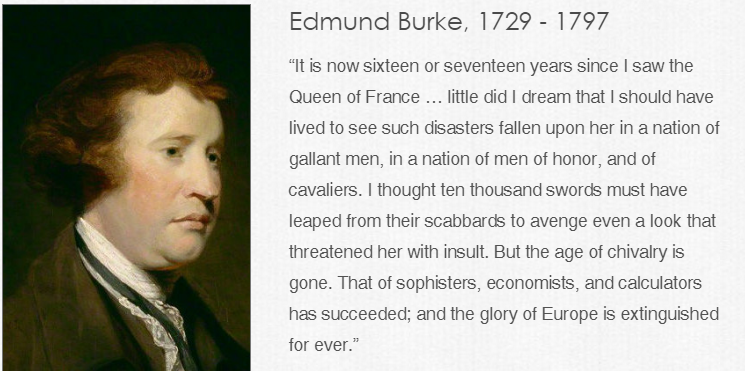
Great Thinkers page on Edmund Burke

Thursday, January 19, 2017

http://thegreatthinkers.org/burke/

Including a video by Harvey Mansfield, professor of government at Harvard, who discusses Burke’s defense of political parties and “party government.”


Overview of Neo-Liberalism

Saturday, May 28, 2016

Neoliberalism by Investopedia
http://www.investopedia.com/terms/n/neoliberalism.asp

A Primer on Neoliberalism
http://www.globalissues.org/article/39/a-primer-on-neoliberalism

A beginner’s guide to neoliberalism by New Economics Foundation
http://www.neweconomics.org/blog/entry/listen-a-beginners-guide-to-neoliberalism

Neoliberalism's stealth revolution by Wendy Brown ( neo-feudalism


Institute for New Economic Thinking channel...
https://www.youtube.com/channel/UCp5hG8rt1z2MJ9aNVxY2Xdg

"Capitalism derives its moral legitimacy from being governed by democracy." But it is now expected that the operations of government, public morality, and access to civic participation are to be determined by privatization and market forces. In other words, democracy and our national character are owned by a small cabal of people who have insulated themselves from the same market forces everyone else is expected to bear. All economic, health, and legal risk are pushed off onto the very people whose wages are artificially suppressed. At the same time, the largest capital accounts are enjoyed by the least productive people.

The job of Congress is to
1) incrementally redefine corporate fraud as "legal"
2) insulate artificially created profit from natural market forces
3) restrict the movement of capital from flowing back into wage and payroll accounts.
4) provide income for government-dependent corporations via foreign policy
5) insulate corporate constituents from liability and the consequences of mismanagement
6) shift legal, physical, and financial risk onto labor

Real free market capitalism is called "redistribution" by talk radio. 

The Republicans’ Incompetence Caucus

Thursday, October 15, 2015


The House Republican caucus is close to ungovernable these days. How did this situation come about?
This was not just the work of the Freedom Caucus or Ted Cruz or one month’s activity. The Republican Party’s capacity for effective self-governance degraded slowly, over the course of a long chain of rhetorical excesses, mental corruptions and philosophical betrayals. Basically, the party abandoned traditional conservatism for right-wing radicalism. Republicans came to see themselves as insurgents and revolutionaries, and every revolution tends toward anarchy and ends up devouring its own.
http://www.nytimes.com/2015/10/13/opinion/the-republicans-incompetence-caucus.html

The invisible moral disintegration of the American religious right

Saturday, May 23, 2015


http://gaplauche.com/blog/2011/04/24/is-libertarianism-a-gnostic-or-utopian-political-movement/

http://www.salon.com/2011/11/09/the_moral_crisis_of_modern_capitalism/

http://dougwead.wordpress.com/?s=wall

http://www.grist.org/politics/2011-11-02-imbalance-american-party-politics

http://www.bostonreview.net/BR36.5/ndf_t_m_scanlon_libertarianism_liberty.php

http://distributistreview.com/mag/2011/10/a-short-primer-for-protestors/

http://www.telegraph.co.uk/news/newstopics/howaboutthat/3123516/Wall-Street-trader-becomes-a-monk.html

Intelligence, education, and political activity

Friday, January 23, 2015


It just can't be true that people with more education would tend to align with the "conservative" Republican party. "However, in most national and regional studies on voting behavior... just such a relationship is typically observed..."
http://www.jstor.org/discover/10.2307/2778029?sid=21105143536851&uid=3739256&uid=2129&uid=4&uid=2&uid=3739848&uid=70

Really?? But we are taught to assume the opposite. After all "for every one percentage point increase in college graduates in a state, the percentage of Democratic identifiers increases by 0.75 percent":
http://www.progressivepolicy.org/blog/more-college-graduates-more-democratic-voters/

But wait... the research results are actually all over the board:
http://www.psychologytoday.com/blog/unique-everybody-else/201305/intelligence-and-politics-have-complex-relationship

So, if you want to understand how human political activity, there is a lot to absorb. But if you want to find research that confirms what you want to be true, there is a lot to choose from.

eric voegelin & leo strauss

Friday, January 2, 2015

http://www.theimaginativeconservative.org/2015/04/eric-voegelin-leo-strauss-and-american-conservatism.html

Saturday, July 7, 2012

From Facebook:

The Right wants to believe they are losing the culture wars because everyone is out to get them. When in reality they are losing because they have thrown away their traditional roots and have been selective about when to apply morality. For example, gay marriage and abortion- they appeal to Natural Law and a higher morality. But on finance, medical coverage, and insurance, the Right makes a 180 degree turn and goes all 'social darwinism' on us.

Because when a single mother needs assistance, Jesus is looking over her shoulder and wagging his finger in disapproval. But when we talk about business ethics of the financial industry, all of a sudden Jesus doesn't exist and we are living in Hobbes's state of nature.

How do we keep people from seeing these inconsistencies? De-fund humanities and language programs- the foundations of a conservative world view.

Are religions ideas really insulated from scrutiny in our culture?

Sunday, March 18, 2012


Do you agree with this? David A. Hollinger of University of California, Berkeley asks whether faith-based politics are given enough scrutiny in American politics. Hollinger writes:

By "giving religious ideas a 'pass' " I refer to the convention of maintaining a discreet silence when one hears a religious idea expressed, no matter how silly it may seem. This convention, which is deeply rooted in the assumption that religion is a private matter, shields religious ideas from the same kind of scrutiny to which we commonly subject ideas about the economy, gender, race, literature, science, art, and virtually everything else...

...Skeptics are expected to refrain from asking the faithful to clarify the epistemic status of the Bible, and from inquiring about the evidentiary basis for the doctrine of the atonement. Arguments within faith communities are allowed (Methodists can challenge one another on whether Paul’s letter to the Romans means that same-sex relationships are contrary to God’s will, Catholics can dispute one another’s opinions about Vatican II, and committed Christians generally can argue over the relevance of the Bible to today’s evolutionary science), but the greater the intellectual distance between the potential critic and the person whose beliefs are at issue, the less socially acceptable it is for the critic to speak candidly.

...When religious ideas are offered as justifications for public policy, those ideas should be subject to the full heat of critical debate. As Harry Truman said in another context, “If you can’t stand the heat, get out of the kitchen.” What would happen if religious ideas were subjected to such a debate? I want to conclude with some speculations. A robust, critical discussion of religious ideas might encourage popular faiths more consistent with modern standards of plausibility, more conscious of the historicity of all faiths, and more resistant to the manipulation of politicians belonging to any party.

The learned elites of the United States have been too reluctant to honestly engage the American public on the religious grounds that continue to be important in this society, which is by far the most religious in the industrialized North Atlantic West.

A forthright, public debate about religious ideas might reveal that the most important religious divide in the United States today is not between secularists and believers, but between two rather differently constituted parties:

1) a broad dispersion of secularists and classically liberal Protestants, Catholics, Jews, and Muslims and 2) a variety of fundamentalist and evangelical believers whose understanding of scripture, divinity, and science remain oblivious to the critical spirit of the Enlightenment.

Perhaps the salient solidarities are not communities of faith and of unbelief, but of people adhering to modern structures of cognitive plausibility and of people rejecting those structures.

(The above text is excerpted from "Civic Patriotism and the Critical Discussion of Religious Ideas" by David A. Hollinger. Published by Center for American Progress, 2008.)

What do you think? I have my likes and dislikes about his ideas- I'm wondering if anyone else will key in on the same ones.

I'm not sure where David Hollinger thinks there is a "discreet silence" being kept regarding religious ideas when the truth of Christian claims and the reliability of Christian scriptures are constantly being debated in the media. (Hitchens and Dawkins are like rock stars.) Plus, he is a professor at Berkeley, a place where people usually have no problem expressing their skepticism of traditional beliefs.

I also don't know why skeptics should refrain from asking the faithful to clarify certain points of belief. I think that is only natural and should be welcomed. If someone does not elaborate on a religious idea because they think it is silly, I would interpret that as simply being respectful.  At some point everyone finds something silly in another belief system (and sometimes even in their own!); it only seems polite to not make a public spectacle out of it. Let's not agonized over points of disagreements at the expense of enjoying each others' company.

I would take Hollinger's idea a step further:  I feel that the Christian conservatives are not prepared for skeptical dialogue.  Because it is  too easy to turn inward and be exclusive, it simply doesn't happen enough. To illustrate my point, the authors I mentioned above, Hitchens and Dawkins, are almost unknown in Christian circles.  Then one day the young people encounter the New Atheists and learn they have not been prepared. Oh, they know more than enough about conservative politics but they discover that being a staunch political conservative has done nothing to help them defend their faith in the public arena. So I agree with Hollinger that more skepticism is a good thing.

David A. Holling (of University of California, Berkeley) argues that rigorous scrutiny of faith-based politics might reveal that the real division in the United States is not between secularists and believers, but between the following two parties:

"1) a broad dispersion of secularists and classically liberal Protestants, Catholics, Jews, and Muslims and 2) a variety of fundamentalist and evangelical believers whose understanding of scripture, divinity, and science remain oblivious to the critical spirit of the Enlightenment."

This is where I disagree with Holling.  His characterization of religious groups in America is too simplistic.  He has conveniently made fundamentalist and evangelical Christians the great anti-intellectual obstacle that impedes progress in America, while the rest of us all work easily together.  Evangelical Christianity is too diverse in both politics and in their views on spirituality. In fact over the past 10 years international NGOs have seen increased interest and support from evangelical Christians, an area typically dominated by the political left.  He suggests that "fundamentalist and evangelical believers" have the monopoly on being "oblivious to the critical spirit of the Enlightenment." Most would agree that there are Catholic, Jewish, and Muslim groups that fall in this category too.  Though it is fair to point out that Jewish and Muslim groups of this kind will still identify with the left out of a mistrust of the religious right's political influence.

There is the sentiment in the United States that if Christianity is properly understood one will feel obligated to throw their lot in with the Republican Party.  Partly for this reason the Republican Party is highly identified with evangelical Christianity.  Perhaps this is what Holling is talking about in the first place; that social conservatism seems to alienate just about every other religious belief, regardless of how conservative they might actually be. Still, those reactionaries actually opposed to scientific and enlightenment thought are way too few to affect policy on a national level.  I believe it is the case that faith based politics has an appeal to a wider spectrum of belief, including nominal church goers and "paleo-conservatives" (i.e those who might even be skeptics yet value the place of traditional institutions).

I believe we will actually see greater skepticism of faith-based politics come from traditionalist Christians in the coming years (at least on certain issues), but that's too much to go into here.

Neo-Con Foreign Policy GroupThink

Tuesday, November 15, 2011

From a recent Pat Buchanan article:


Mitt says that if elected he will move carriers into the Persian Gulf and "prepare for war." Newt is even more hawkish. America should continue "taking out" Iran's nuclear scientists -- i.e., assassinating them -- but military action will probably be needed.

For the retired head of Mossad, Meir Dagan, calls attacking Iran "the stupidest thing I have ever heard of."

I have a difficult time believing that we are actually talking about action against Iran. It is like a bad dream. I can only hope it is pre-election saber-rattling. But even worse than a bad dream, it comes with a strong sense of déjà vu: Early in 2007 I was listening to Michael Savage. That's right, I was listening to Michael Savage. As a trade analyst and (now) political science teacher, I have always felt it imperative to stay aware of public discourse and the opinion leaders that influence perception. To continue, I was disturbed at the foreign policy position he was advocating toward Iran and the next day I wrote the following on a blog:

...it wasn't so much that I disagreed with it (because I don't have a problem listening to things I disagree with), the problem is that the information was so bad, almost insane. He was talking to John Hagee, a famous TV prophecy guy. He said 70% of Iran was dissatisfied with their government (or some statistic like that) and that the US should invade Iran and liberate that 70%. That's one of the most insane things I've ever heard in my life.

Iraq has 18 million people, its demographics a hodgepodge created by post colonial nation-building, and it is largely flat. And how is our liberation of that country proceeding? Iran on the other hand has 70 million, is a 3000 year old civilization, and is one of the most mountainous countries of the world. Do we really have to wonder how that would turn out? Are we ready for the increase in oil prices that will occur after Iran retaliates by cutting off its oil supply? What kind of cost-benefit analysis are the neo-cons using?

Growing Up Conservative?

Saturday, November 5, 2011

I read with great interest the Circe Institute article entitled "Growing Up Conservative?" (posted Tuesday, September 20, 2011). It mirrored some of my concerns regarding the foundation of modern education.

There is much in this article to ruminate upon.  Andrew Kern explores the "elephant in the room" that many conservatives refused to speak of publicly, that is, the innocent ignorance or willful disregard of conservatism's most esteemed contributors throughout history  (i.e. Kirk, Burke, de Toqueville) in favor of the louder and more embarrassing voices of Glenn Beck, Ann Coulter, Sean Hannity, etc.

No wonder Rush Limbaugh represents conservative thought to our age. When you go to school, you learn something between the Whig and the French Revolution version of history and humanity... [The student will] be compelled to study analytical approaches to normative subjectives for years. If his soul survives at all, it will have a respect for tradition and simply tune out the hyper-analysis of the modern university. But it won’t have been given the good food it so craved.

But in a way, it’s the liberals’ fault that conservatives are so reactionary. We’d like better thinkers to follow, but they’ve convinced us there aren’t any, if only by removing them from the curriculum.

Kern begins to address a serious problem within the conservative side of modern politics but rather than giving a deeper analysis, he instead panders to the ego of a conservative readership. Why are conservative-minded people unaware of these great men; men who agreed on the self reliance of the individual and the promotion of a social liberty in which the individual is free to find a success or failure?  According to Kern, it's all someone else's fault, not ours. Kern extols the virtues of those who wrote in the conservative tradition yet departs from their central philosophy as soon as the light of self introspection becomes too painful to bear.  He adopts the banner cry of modern victim politics: it's all someone else's fault, not ours.

It must be pointed out that the Circe Institute's core mission is educational and it makes perfect sense that Kern would focus on the weaknesses found in modern curricula.  And it is understood that his primary audience is concerned with reviving a superior mode of education.  But the Circe Institute is also read by many non-educators and Kern's article had the potential for a greater impact, but by not fully addressing the very problem he brings to light (and courageously so, I must give him that), I feel he helps perpetuates the sad state of affairs.  If we accept the philosophy of self reliance and rugged individualism, we must accept the responsibility for our own failures.  The university system has never stopped anyone from entering a library and reading Kirk or Burke.

It isn't "the liberals’ " fault that conservatives are so reactionary.  Conservatives are reactionary because they so freely give themselves over to these pop-conservatives and refuse to even question them. It is as simple as that. These lesser people are given a place of honor they have not earned. It is an indulgence on the part of conservatives.

Kern is accurate when he describes the modern approach to social sciences:

He’ll be compelled to study analytical approaches to normative subjectives for years. If his soul survives at all, it will have a respect for tradition and simply tune out the hyper-analysis of the modern university. But it won’t have been given the good food it so craved.

And later...

We’re only given the calculators (i.e. analysts, pragmatists, skeptics) to read.

Russell Kirk 1918 - 1994
This was my experience as a student of political science.  However, I do not blame a curriculum or a university system for my lack of exposure.  Any deficiency on my part I considered my fault if I refused to inquire further.  In order to make the best grades possible, was it not my responsibility to do my homework and research as thoroughly as I could?  It was the hunger for an older and higher excellence that was always just out of reach (and still is) that drove me into the arms of Aristotle, Cicero, Russell Kirk, and Shakespeare.

At this moment in American culture the pop-conservatives mentioned by Kern (Rush, Hannity, Coulter, Beck) carry more clout and are relied upon more heavily among the average conservative.  In contrast, humanities educators are viewed with great skepticism especially those in the social sciences.  So if we must blame someone other than ourselves, it makes little sense to point the finger at the university.


Kern's article gives us the perfect platform from which to ask why Rush, Hannity, Coulter, or Beck have never done an on-air study of G. K. Chesterton or Russel Kirk.  Kern's article gives us the perfect platform from which to ask why Rush, Hannity, Coulter, or Beck have never debated Noam Chomsky as did William Buckley.  The simple reason is that these modern opinion leaders simply do not have the intellectual ability despite their never ending, self-glorifying bombast. In order to maintain their media constructed image of "leader", they necessarily must avoid drawing listeners' attention to the greats. Kern's article is the timely platform from which to start openly discussing the fact that Rush, Hannity, Coulter, or Beck have more opportunity to impart virtue to their loyal followers than even the best curriculum, yet they do not.

If we are going to preach personal responsibility we need to practice it ourselves.

How Conservatives Failed "The Culture"

Monday, October 10, 2011

By Claes G. Ryn

Official professions to the contrary, many self-described American intellectual conservatives have a thinly veiled disdain for philosophy and the arts. Even among academics indifference to what lies beyond broad ideas and popular culture is common. The ruling assumption of the now dominant strains of intellectual conservatism seems to be that the crux of social well-being is politics: bad politicians ruin society; good politicians set it right. Nothing fascinates conservatives more than presidential politics. For social problems to be effectively remedied and for worthy objectives to be achieved, “our” candidate must win the next election, “our” people man the government.

... Ideas and the arts are mainly pleasant diversions. Many others have only slight interest in philosophy and culture for their own sake. More or less consciously, they tend to assess either thought or imagination from the point of view of whether it advances or undermines the political cause that they assume to be incontestable. Does the book, lecture, play, movie, or song help or hinder the cause? Although such works may enlighten or entertain, they do not strike these individuals as having intrinsic and independent authority. Works of thought and imagination are for them not intriguing and potentially unsettling forces that might trigger painful self-examination and unpredictably reconstitute one’s own accustomed views; making sense of them is not so much a matter of soul searching as of locating them on the political spectrum.

Read the rest of the article here...

Bizarre CNN report on Tax Day Tea Parties

Saturday, April 16, 2011

Check out this bizarre report on one of the Tea Party locations. First of all, the participants were not unwashed masses duped by a slick "right wing" campaign.

The idea simply went viral. Regardless of how involved Fox may have been in the organization, it resonated with a substantial number of Americans. More specifically, the reporter could not detach herself emotionally from the issue, and she could not, or was unwilling to see there is a legitimate concern about the long term effects of the stimulus packages.

I absolutely love hearing regular folks on the street articulate historic American principles, and this guy was doing it well, and it was heart-felt. But she had to shut him down.


This tactic is called "framing the issue" but once she got to "anti government" it turned into a blatant lie. "Propaganda" would be a nice word for it. At the end she says "this is not family viewing." No, legitimate and peaceful free speech is okay... as long as it is anti-Republican. This was an absolute abuse of the reporter's profession.

She wanted those people to be unthinking, troglodytes. She wanted them to be anti-government rednecks. But she didn't like the fact that the man had a cogent idea ready to be expressed.

How DARE you quote Lincoln!

Did you notice she said "the State of Lincoln?" Is this a new metaphor for the administration, or perhaps a new term coined by the Left in order to romanticize themselves? Maybe not. Hard to tell. I don't want to build a mountain out of this molehill but that still brings up a tactic used by the Left.

The Left will heavily use certain terms with the hope that everyone will associate such positive terms with their policies (as does the Right, i.e. the "Freedom to Farm" bill benefitted global ag conglomerates). For example, they started calling themselves "progressive" and now that term is associated with the Democratic side. The implication is that if you are not on their team, you are not progressive- you are therefore REgressive and backward. It is propaganda through semantics, and I feel it is dishonest.

Conservatives should have called them on this a long time ago, but they were asleep at the wheel, too busy worrying about one world government and conspiracies, while the entire time the liberal left was working on getting themselves written into history books as "progressives." Conservatives need to realize that this semantic game is far more powerful and far more insidious than international organizations.

The intention is that, in the long run, such language will get written into US history. When later generations read "progressive" (and maybe even "State of Lincoln") in history books, it will color their interpretation of our time period in favor of one political agenda and by then the fact of a semantic game won't matter any more. History will have been written, and you won't be there to balance out the story.

Does this historical manipulation really work? I mean, does this kind of political opportunism really affect how future generations view history? I can give you a perfect example. Consider the following quote by Confederate Major General Patrick Cleburne:

...It is said slavery is all we are fighting for, and if we give it up we give up all. Even if this were true, which we deny, slavery is not all our enemies are fighting for. It is merely the pretense to establish sectional superiority and a more centralized form of government, and to deprive us of our rights and liberties.

So Cleburne proposed that Black men be conscripted as soldiers to help supplement the dwindling Confederate army. This wasn't the first time such an idea was put forth, but "conservatives" during the Civil War were too busy being loyal to ideas of aristocracy, and Cleburne made this historic prediction regarding how their failure to address the bigger need allowed someone else to determine how the South would be remembered:

...It means the history of this heroic struggle will be written by the enemy; that our youth will be trained by Northern schoolteachers; will learn from Northern school books their version of the war; will be impressed by the influences of history and education to regard our gallant dead as traitors...

The result? Slavery is now the official reason why the South fought the Civil War. Hundreds of thousands of Southern men fought, were maimed, endured POW camps- all just to “keep the black man down.” Not only did it color our modern interpretation of history, but also fuels the rise of an entire academic field that says "hundreds of thousands of Confederate veterans either remembered everything wrong or they passed on false information; and those Confederate soldiers with non-racist motives were forced to fight against their will."

North American Union

Tuesday, July 8, 2008

Tom Coburn is known for his candor, to the point where he won't kiss up to people even in his own district. So I was pleased to hear his straightforward comments regarding the "North American Union"

...Coburn was also asked about growing concerns that secretive deals have been made to build a NAFTA Superhighway, which would go right through Oklahoma County, and the potential creation of a North American Union.

“There’s been more Internet traffic on that falsehood,” Coburn said. “It’s something based on fear rather than actual fact.” ("Coburn frank on fiscal issues", The Sunday Sun June 01, 2008)
Full story here: http://www.mwcsun.com/local/local_story_153111916.html
People who fancy themselves "enemies" of the NWO can somehow get secretive information that even people in the NWO government can't get. That leads me to conclude that conspiracy believers have a complex network of spies planted in key positions, who monitor the secret agenda and then disseminate the details to their friends with websites, right?

Seriously though, a greater degree of international cooperation across a few widely divergent sectors or policy issues is not an indication of a union. And you can't say "open your eyes, the evidence IS happening!" No. The political and financial changes necessary for a monetary union simply aren't happening.

What is going on in the US economy is not "evidence" of a three country union but rather the chaos created by multiple interests working against each other, but still having an effect on each other (energy, currency valuation, exports, imports, corrupt financial practices, and the military industrial complex).

The North American Union is believed by people whose everyday lives don't deal with international finance, NAFTA, and the European Union. They see a few examples of international cooperation and assume there are connections where there really are none.

Hardcore NAU believers always talk about NAFTA and the EU as proof. I am pretty familiar with both- more so I dare say than NAU believers. First, NAFTA is nothing like the European monetary union. A monetary union wouldn't really be a next logical step because NAFTA isn't close enough to being a monetary union. There would have to be dozens of "next logical steps" over the course of decades to get from NAFTA to a monetary union. There is no customs union, to name one.

In fact, there are things in NAFTA that would make a North American Union (NAU) extremely difficult if not impossible, such as the side deal on import surges, management of petrochemicals, etc. NAFTA would have to be re-written or done away with altogether in order for there to be a monetary union.

Second, you don't just start printing a new kind of money and make everyone use it. In Europe the currency union was a massive undertaking that required years of coordination among banks and legislatures and was carried in the news daily. Textbooks were written on it. Exactly where does this effort show up in our Congressional Record?

The implementation of an international plan would have recognizable and specific effects in immigration, public spending, and financial markets that no conspiracy could hide. If there is going to be a union, then Mexico and Canada would have to subsume our public debt. Union would also mean an alignment of interest rates among all three countries. Now if there is a NAU conspiracy to make this happen without our knowledge, the the burden of bringing their interest rates into alignment would be totally theirs. This would throw their labor markets into chaos like it did in Europe. Getting the governments and banks of Canada and Mexico to share U.S. public debt- and make the macro-economic sacrifices to do it secretly- would be more difficult than establishing a colony on Venus.

It would not be in Canada's interests to unify currencies when the US dollar has been declining in value for the past two years. The Canadians certainly don't want our banks steering their financial boat after the recent mortgage fiasco. And it would not be in Mexican industry's interests when they've brought several trade complaints against us to the WTO.

The real issue is that Canada and Mexico simply don't want a union. Canadians don't want to be a part of our unwieldy economy and Mexico doesn't want our business laws, financial transparency laws, or our environmental standards. There are too many people who make too much money outside of the law in Mexico. That's not a value judgment, that's just how some business is conducted in their culture. So whose corporate laws will prevail after a union? Mexico wouldn't function with our transparency standards, which would be absolutely vital for merely aligning exchange rates, not to mention a union. Our businesses don't want their business environment, and their businesses don't want ours.


Here is the saddest part, the people that DO believe in it and who write online should be able to present a reasoned and respectable debate with those who make policy and demonstrate point by point why non-believers are wrong, and why non-believers are misinterpreting the facts. But how do they debate? How do they address non-believers? It usually goes something like

"You don''t believe in the conspiracy because you are stupid."

If you google NAU, you'll see the word "stupid" used more often than at grade school recess. Why? Because ad hominem is the best they can do. So if you believe in an immanent NAU, you are exempt from common respect and civility.

One thing we can agree on is that the loss of civility and common courtesy is undermining our social fabric. It is ironic that people who are "in the know" and claim to be better Americans than the rest of us, are fully participating in a trend that erodes the greatness of our nation.

So those who deal with international trade issues on a daily basis are somehow blinded to an international conspiracy... but random bloggers with no experience in international matters and journalists with little knowledge of macro-economics somehow know the real story? No. I don't think so.

See also:

- http://www.snopes.com/politics/immigration/nau.asp
- http://www.rightwingnews.com/archives/week_2006_07_16.PHP#006080
- http://blogcritics.org/archives/2007/03/25/090958.php

- http://www.townhall.com/columnists/JohnHawkins/2007/09/14/the_non-existent_north_american_union


There is no good reason for a monetary union and no one with influence wants it. People argue it exists because they have invested so much time believing in it in the first place.

I teach them all the good I can, and recommend them to others from whom I think they will get some moral benefit. And the treasures that the wise men of old have left us in their writings I open and explore with my friends. If we come on any good thing, we extract it, and we set much store on being useful to one another. - Socrates, Memorabilia


What we maintain is that in none of the problems of life can men afford to lose sight of the storehouse bequeathed to them by the ancients. In the complexus of everything which differentiates man from the brute creation, the voice of antiquity must be heard...

-H. Browne, quoted in "Classics and Citizenship" The Classical Quarterly, 1920