Showing posts with label Political Philosophy. Show all posts

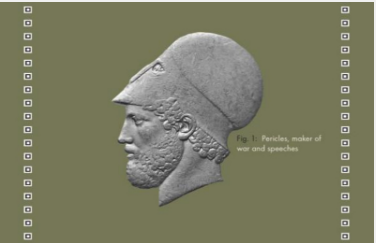
How to Think about War: An Ancient Guide to Foreign Policy

Saturday, March 2, 2019

Johanna Hanink, associate professor of classics at Brown University, talks about her book How to Think about War: An Ancient Guide to Foreign Policy, published by Princeton University Press. She has selected, translated, and introduced key speeches from Thucydides's History of the Peloponnesian War. From the "Ancient Wisdom for Modern Readers" series


--

Locke and Inalienable rights

Thursday, October 26, 2017

Why It Matters That Some Rights Are "Inalienable"
https://fee.org/articles/why-it-matters-that-some-rights-are-inalienable/

John Locke: Natural Rights to Life, Liberty, and Property
https://fee.org/articles/john-locke-natural-rights-to-life-liberty-and-property/

Studying Latin is better for Running a Business

Sunday, April 23, 2017

Why Studying Latin, More So Than Business, Is Ideal Training for Actually Running a Business


 http://blog.capterra.com/studying-latin-for-business-is-better-training/

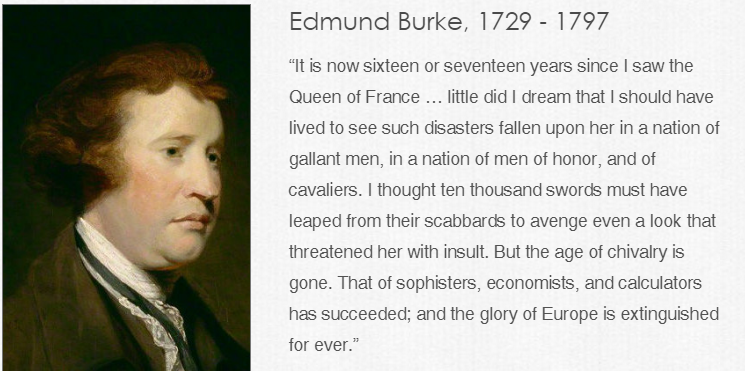
Great Thinkers page on Edmund Burke

Thursday, January 19, 2017

http://thegreatthinkers.org/burke/

Including a video by Harvey Mansfield, professor of government at Harvard, who discusses Burke’s defense of political parties and “party government.”


Philosophy / Ethics Courses Online

Thursday, May 5, 2016


Lander.edu homepage
http://philosophy.lander.edu/index.html

Introduction to Philosophical Thinking
http://philosophy.lander.edu/intro/introbook-links.html

Introduction to Ethical Studies An Open Source Reader
http://philosophy.lander.edu/ethics/ethicsbook.pdf

Ethics Study Questions
http://philosophy.lander.edu/ethics/notes-topics.html

Video list from Claremont Institute

Saturday, August 15, 2015

add to menu on the side?

http://www.theamericanmind-claremont.org/index.php?action=allvideos

Necessities: the things I (and all Poli Sci ppl) need to read and understand

Monday, August 3, 2015

The Mystical as Political: Democracy and Non-Radical Orthodoxy- Aristotle Papanikolaou, The first comprehensive treatment from an Orthodox theological perspective of the issue of the compatibility between Orthodoxy and liberal democracy, Papanikolaou’s is an affirmation that Orthodox support for liberal forms of democracy is justified within the framework of Orthodox understandings of God and the human person.  Aristotle Papanikolaou argues that a political theology grounded in the principle of divine-human communion must be one that unequivocally endorses a political community that is democratic in a way that structures itself around the modern liberal principles of freedom of religion, the protection of human rights, and church-state separation. His overtly theological approach shows that the basic principles of liberal democracy are not tied exclusively to the language and categories of Enlightenment philosophy and, so, are not inherently secular. Aristotle Papanikolaou is professor of theology at Fordham University.

(and along the same lines as above, the Eastern counterpart to Catholic Social teaching) The Basis of the Social Concept by the Russian Orthodox Church. Adopted at the Sacred Bishops’ Council of the Russian Orthodox Church, this document sets forth the basic provisions of her teaching on church-state relations and a number of problems socially significant today. It also reflects the official position of Moscow Patriarchate on relations with state and secular society. In addition, it gives a number of guidelines to be applied in this field by the episcopate, clergy and laity.


Philosophy Between the Lines: The Lost History of Esoteric Writing (2014) Arthur M. Melzer-
The first comprehensive, book-length study of the history and theoretical basis of philosophical esotericism, and it provides a crucial guide to how many major writings—philosophical, but also theological, political, and literary—were composed prior to the nineteenth century. Covering ancient (Plato) and modern (Machiavelli) works, Melzer explores esotericism and the various motives that led thinkers in different times and places to engage in that form of writing. By ignoring esotericism, we risk cutting ourselves off from a full understanding of Western philosophical thought. In the book’s final section, “A Beginner’s Guide to Esoteric Reading,” Melzer turns to how we might once again cultivate the long-forgotten art of reading esoteric works. - University of Chicago Press. A vindication of Leo Strauss.


Managing the Public Service: A Casebook in Ethics and Leadership
- Sharpe, Brett, Grant Aguirre, and Kenneth Kickham. Boston: Pearson Higher Education (2009).  this unique casebook contains dozens of brief, engaging case studies for public administrators in public and nonprofit institutions. Inspired by real-life stories, these short cases cover a wide range of topics from affirmative action to human resources to sports management. 


Guide to Thomas Aquinas- Josef Pieper, Aquinas reconciled the pragmatic thought of Aristotle with the Church, proving that realistic knowledge need not preclude belief in the spiritual realities of religion. According to Pieper, the marriage of faith and reason proposed by Aquinas in his great synthesis of a "theologically founded worldliness" was not merely one solution among many, but the great principle expressing the essence of the Christian West.

The Genesis of Justice: Ten Stories Of Biblical Injustice That Led To The Ten Commandments And Modern Law (2000) Alan Dershowitz- Dershowitz is persuaded that our entire modern system of morality grows out of genesis. He argues that the bible as contrasted with earlier legal codes is a law book explicitly rooted in the narrative of experience 6 that it is the very social injustices in genesis that provoke its readers to recognize the need for justice.

Anatomyzing Divinity: Studies in Science, Esotericism and Political Theology (2012) James Kelley- Kelley explores alchemy as an important aspect of inquiry in Western Civilization in "Anatomyzing Divinity: Studies in Science, Esotericism and Political Theology". The book is an attempt to afford the reader rare insights into the history and meaning of Western esotericism.

The Messianic Idea in Judaism: And Other Essays on Jewish Spirituality- Gershom Scholem, series of essays exploring the crises caused by fits of messianism in Judaism, especially the Sabbatian crisis. Majority of the book discusses the rise and fall of messianism through the medieval period and how Sabbatianism and Hasidism influenced the messianic themes that are prevalent in today's Judiasm. Other essays discuss mystical symbolism and the mystical golems. 


The Origin of the Family, Private Property and the State- Friedrich Engels
Socialism: Utopian and Scientific- Frederick Engels
The Process of Production of Capital- Karl Marx


The Transformation of the American Democratic Republic- Stephen M. Krason. a thorough and objective account of American history from the Founding to the present day. Documenting the transformation of the American democratic republic from the perspective of constitutional law, political theory, and political sociology, he presents a compelling and provocative argument regarding the causes of the transformation and decline of American civic life.

The Conservative Intellectual Movement- George H. Nash. Since 1945 is the authoritative study on conservatism’s intellectual renaissance. In it, Nash outlines an American conservative movement that was forged, at times uneasily, from three intellectual groups: libertarians, anti-Communists, and traditionalists. In terms of organization, it seems sensible to consider each group in light of the literature it produced, for these are the works that gave birth to the political movement with which we are all familiar.

Socialism, Ludwig von Mises- challenged socialist economics as being not only inherently flawed because they are unable to allocate scarce resources efficiently, but contrary to the very nature of the individual as well. Collectivist economics does not recognize the central role played by the entrepreneur in ordinary economic and social organization. For Mises, socialism was far from being a humane alternative to the free market. Rather, at bottom, it was contrary to human nature itself. By denying the human aspect—the role each individual plays in communicating vital economic information—socialism, according to Mises, was doomed to fail.

The Road to Serfdom, Friedrich von Hayek, The purpose of his book was to explain “why and how certain kinds of economic controls tend to paralyze the driving forces of a free society.” Economist Harry C. Veryser has observed that the unique feature of this book “was that at the very time governments and economies were centralizing, Hayek was arguing that increased government planning and control of the economy would by its very nature create the conditions that would lead to the kind of totalitarianism that shocked the world in Germany, Italy, and Russia.” For Hayek, the socialists, under the guise of equality, were setting us back on the road to serfdom—that is, back to a condition of political and economic servitude and away from the ideal of a free society.

The Conservative Mind- Russell Kirk. Kirk set out to prove that there is no conservative blueprint or “system”—that is, no conservative ideology. For him, conservatism is a disposition, a way of living and viewing life. He outlined six “canons of conservatism,” however, to suggest a coherent philosophical vision. But in the realm of political governance, Kirk believed that prudence, aided by right reason, is one’s surest guide, and that politics, as Burke had taught, was “the art of the possible.” The body of belief that we call ‘conservatism’ is an affirmation of normality in the concerns of society. There exist standards to which we may repair; man is not perfectible, but he may achieve a tolerable degree of order, justice, and freedom….

On the Democratic Idea in America- Irving Kristol, neoconservative, The subject of the book the tendency of democratic republics to depart from…their original, animating principles, and as a consequence precipitate grave crises in the moral and political order. The notion of the ‘hidden hand’ has its uses in the market place,” he also believed that “the results are disastrous when it is extended to the polity as a whole….” For Kristol, “[s]elf-government, the basic principle of the republic, is inexorably being eroded in favor of self-seeking, self-indulgence, and just plain aggressive selfishness.” Much of this book has been reprinted in Kristol’s Neoconservatism: The Autobiography of an Idea.

The Quest For Community- Robert Nisbet, The emergence of the “centralized territorial State” in the wake of the Middle Ages decisively impacted Western social organization. Nisbet was particularly sensitive to the rise of the “national community,” the total political state, and he posited that the decline of the West was intimately connected to the decline through the centuries of intermediate associations between the individual and the state. The weakening or dissolution of such bonds as family, church, guild, and neighborhood had not, as many had hoped, liberated men. Instead, it produced alienation, isolation, spiritual desolation, and the growth of mass man.” Nisbet alerted post-war conservatives, many of whom were uncompromising individualists, that “the quest for community will not be denied, for it springs from some of the powerful needs of human nature—needs for a clear sense of cultural purpose, membership, status, and continuity.”

Ideas Have Consequences- Richard Weaver, the Unity of tradition and liberty. the denial of the existence of universals led directly to cultural deterioration and to the contemporary West’s primary malady: moral relativism. Weaver insisted that the “[d]enial of everything transcending experience means inevitably... the denial of truth. With the denial of objective truth there is no escape from the relativism of ‘man is the measure of all things.’”


(the above lifted with few edits from here)

Konstantin Pobedonostsev- "Reflections of a Russian Statesman"

Vladimir Solovyov- "The Justification of the Good: An Essay on Moral Philosophy"

Vladimir Solovyov- "Divine Sophia: The Wisdom Writings of Vladimir Solovyov"

Thucydides: History of the Pelopponesian War. An excellent history of the long war which includes the famous Melian Dialogue and the funeral oration of Pericles. Thucydides was arguably the greatest historian of antiquity. His work touches upon the perennial themes of war and power, human nature and aggression, justice and virtue.

Plato: The Republic. A ten-volume work which looks at the meaning of justice. Questions such as the equality of women and the meaning of virtue are considered. Other philosophical areas are touched upon as well (e.g., theory of forms).

Aristotle: Politics. Aristotle examines the nature (and origin) of states, embraces slavery, and considers the many forms of government (constitutional government the best, he thought).

Polybius: The Histories. The Greek historians examines the nature of change and considers different forms of social organization.

Cicero: Republic; Laws. "True law is right reason in agreement with nature," he says. In these two works (so named out of respect for Plato) Cicero considers social responsibilities, ideal constitutions, and natural law.

St. Augustine: City of God. One of the best known works of political philosophy. Dichotomy between city of man /city of God introduced. The work is less a commentary on the nature of social organization, more a vision of the good life.

Thomas Aquinas: Summa Theologica. St. Thomas looks at the nature of laws, particularly natural law, alongside use of human reason and argues that government is necessary because "man is a social being".

Dante Alighieri: De Monarchia. A work not nearly as well-known as La Commedia, but one in which the poet argues in favor of a world government.

Machiavelli: The Prince. The harbinger of modern notions of realpolitik, The Prince looks at the ways one may go about procuring and keeping power.

Machiavelli: Discourses on Livy


Jean Bodin: Six Books On The State. Bodin was the first to elaborate upon sovereignty ("the absolute and perpetual power of the state, that is, the greatest power to command"). In this work he proposes both an end to slavery and a strong central government.

Thomas Hobbes: Leviathan. One of the earliest of the so-called social contract philosophies. Hobbes argues pragmatically in favor of a monarchy (leviathan). Life, he said famously, is "solitary, poor, nasty, brutish, and short."

John Locke: Two Treaties Of Government. Another of the famous social contract philosophies, Locke's begins with a law of nature, the law being reason: that "no one ought to harm another in his health, liberty, or posessions." The work impassioned the framers of the American Constitution and gave voice to constitutional government.

Montesquieu: The Spirit Of The Laws. Montesquieu examines the principles of democracy, the constitution of England, and the role of religion in society.

Jean-Jacques Rousseau: Discourse On The Origin Of Inequality; The Social Contract. Earlier philosophers had respected civilized man (i.e., men and women who lived under government and developed the arts and sciences); Rousseau instead honored "man in the state of nature". Source of personal corruption and sundry maladies is society, he thought. The Social Contract outlines his view of civil society and the General Will and begins with a famously paradoxical line: "Man is born free; and everywhere he is in chains."

Edmund Burke: Reflections On The Revolution In France. Burke opposed the revolution and championed conservative causes.

Jeremy Bentham: Principles Of Morals And Legislation. Bentham embraced a hedonistic ethics (utilitarianism) and thought that human beings are corrigible. His work examines the principle of utility and the nature of laws.

Alexis de Tocqueville: Democracy In America. A work that draws upon the author's experience travelling throughout America. Tocqueville describes the tyranny of the majority in public opinion and foresees the coming of universal democracy.

John Stuart Mill: On Liberty. An oft-quoted exposition on liberty that embraces individualism and urges tolerance and open-mindedness.

Karl Marx: The Communist Manifesto. A work equally reviled and revered. Abolition of private property, attainment of the classless society are the ends toward which an enlightened consciousness would naturally work. The Manifesto denounces capitalism and urges workers to rise up against their tyrannical masters.

Friedrich Nietzsche: The Will To Power. Hardly a work of political philosophy, but it offers aphoristically clever and provocative commentary about truth, religion, knowledge, justice, and power.


Important Works Of The 20th Century:


Sigmund Freud: Civilization And Its Discontents. A thin work which examines two aspects of man's instinctual life: the impulse to love and get along and the impulse to attack and destroy (eros and thanatos, or love and death wishes, respectively). Freud argues that civilization is an ongoing battle between cooperative and aggressive impulses.

Jose Ortega y Gasset: The Revolt Of The Masses. A widely influential volume that casts suspicion on revolution and the collectivization of society. Since the masses are for the most part shiftless, they are unable to pull off revolution successfully; indeed, the outcome more often than not is mere dissolution of society. Ortega y Gasset was an essayist and philosopher known chiefly for his existentialist views.

George Santayana: Dominations And Powers. A work written near the end of the philosopher's life, being as much an aesthetic treatment of the subject as political/philosophical. Santayana examines the "generative order" of society, the economic and liberal arts, the military and, not least, rational government -- all in his characteristically lucid way.

C. Wright Mills: The Power Elite. An influential volume which explores the oligarchic nature of American society in general and the lives of the affluent and powerful in particular. The work includes an indispensable analysis of what he calls the "mass society".

Daniel Bell: The End Of Ideology. A collection of essays that argues that the older normative, humanistic questions about politics and society -- questions that dominated nineteenth-century social thought -- have run their course, and that more technical and parochial questions and issues have superseded them.

Reinhold Niebuhr: The Nature And Destiny Of Man; Children Of Light, Children Of Darkness. Protestant theologian who rejected the notion that human beings can triumph over sin and injustice through history. This position runs counter to Marxist theory. Niebuhr accepted a realist interpretation of politics, one that sees democratic controls as necessary but one that steers clear of socialism.

Lewis Mumford: The Myth Of The Machine (2 volumes). An outspoken denunciation of "technological progress" and modern "civilization" by an influential social critic. The two volumes of this work are Technics and Human Development (1967) and The Pentagon of Power (1970).

R.D. Laing: The Politics Of Experience. An informal work, written by an existentialist psychotherapist, which sees alienation and impersonalization emanating from contemporary social structures. Social norms, Laing thought, contribute mightily to "maladjusted" and "conflicted" personalities.

John Rawls: A Theory Of Justice. Imagine, before being born, that you're given a choice. You do not know ahead of time what your social and economic status in life is going to be. You have no idea how genetics will treat you, or what your talents and abilities will be. You might be affluent or you might be destitute; you might be very handsome or very plain; you may have unusual abilities, or you might be very average. Either way, you're given a choice. You can live in a society that is egalitarian, that has a strong safety net, in which the split between rich and poor isn't that big, and in which everyone is "his brother's keeper," or you can live in a highly stratified society -- a society with great inequality; a lot for a few, misery for the many. If you turn out very talented and very rich, you might not mind a highly stratified society, but if you turn out very poor, you might mind very much. Which type of society would you choose before being born, not knowing what kind of life you're going to have? Rawls' point is that people will end up fashioning a society that will be fair to everyone because they don't want to risk ending up in a weak and vulnerable position themselves. This is what he means by defining justice as fairness.

Robert Nozick: Anarchy, State, And Utopia. Nozick sees the ideal state as anarchistic. An original work written in the mid-1970s, partially in response to Rawls' A Theory of Justice.

See also William Ebenstein, Great Political Thinkers: Plato To The Present, a work of over a thousand pages that has an extensive bibliography.


Dr. David Bradshaw, Professor of Philosophy at University of Kentucky

Saturday, June 6, 2015

Dr. David Bradshaw, Professor of Philosophy at University of Kentucky specializes in the philosophical division between the Greek-speaking East and Latin-speaking West. Interviewed by Russian clergy, he talks about the relationship between theology and philosophy. Several of his articles can be found online at the link below...

http://www.uky.edu/~dbradsh/

Political Philosophy topics

Sunday, February 22, 2015

... for a class

Who:
Augustine
Hannah Arendt

Jeremy Bentham
Alan Bloom
Noam Chomsky
Cicero
Daniel Dennett

Konstantin Pobedonostsev- "Reflections of a Russian Statesman"
 

Vladimir Solovyov- "The Justification of the Good: An Essay on Moral Philosophy" and "Divine Sophia: The Wisdom Writings of Vladimir Solovyov"

Bob Black
Derrida
Francis Fukuyama
Jurgen Habermas
Susan Ashbrook Harvey
Stanley Hauerwas
Thomas Hobbes
Russell Kirk
John Locke
Jean Luc Marion
Karl Marx
John Rawls
Jean Jaques Rousseau
Michael Sandel
James Schall
Roger Scruton
Abdolkarim Soroush
Vladimir Solovyev
Leo Strauss
Michael Walzer
Ken Wilber
Slavoj Zizek


...who to add?

What:
the Xian Tradition
Catholic Social teaching, Evangelium
Contract theory
natural law > natural rights
humanist/secular/atheist natural law


web helps:
http://teachphilosophy101.org/

http://www.openculture.com/philosophy_free_courses
http://www.scientificamerican.com/article/the-conspiracy-theory-director/
http://www.lawandliberty.org/critical.htm
http://www.uea.ac.uk/~j097/CONSP01.htm
http://www.scientificamerican.com/article/the-conspiracy-theory-director/?print=true
http://philpapers.org/
http://oyc.yale.edu/political-science/plsc-114
http://oyc.yale.edu/political-science/plsc-118

"RHETORIC" WITHOUT DIALECTIC

Thursday, January 22, 2015

http://www.classicalliberalarts.com/Courses/TRIVIUM/ClassicalDialectic/index.htm

There's talk about Rhetoric, but you can't study Rhetoric without learning Dialectic first.  For proof of this we need look no further than the first line of Aristotle's The Art of Rhetoric.  He says explicitly that:

"Rhetoric is the counterpart of Dialectic."
The art of Dialectic (as well as Grammar) is assumed knowledge in any classical book on Rhetoric, yet students are offered courses in Rhetoric without every studying Dialectic.  How can this be?

Just War: Should the religiously pious fight?

Saturday, April 26, 2014

Just War: Should the religiously pious fight? A debate on violence, military obligation, and the defense of third parties.


"It's Just War" - Should Christians Fight? Debate from FollowersOfTheWay on Vimeo.

10th Annual Association for Political Theory Conference

Thursday, July 26, 2012

10th Annual Association for Political Theory Conference
University of South Carolina, Columbia, SC
October 11-13, 2012
Thursday, October 11
6:00-8:00 Opening Reception


Some of the papers scheduled for presentation...

“Optimism about human nature and political theory,” El Amine Loubna, Princeton University (lel@princeton.edu)
“Autocracy and the Foreigner: the Political Thought of Ibn al-Muqaffa',” Jennifer London, Institute for Advanced Study (jlondon@ias.edu)
“Why opposition matters to democracy, but loyalty does not,” Alexander Kirshner, Duke University (kirshner@gmail.com)
“Frederick Douglass and the Narrative Construction of Freedom,” Matthew Voorhees, Hartwick College (voorheesm@hartwick.edu)
“Odious Debts and Global Justice,” Cristian Dimitriu, University of Kansas (c.dimitriu@ku.edu)
“The Tea Party and the Politics of Populist Imagination,” Laura Grattan, Wellesley College (lgrattan@wellesley.edu)
“Democracy and Symbolism in Thucydides,” Rachel Templer, Goucher College (rachel.templer@goucher.edu)
“Performing Political Rhetoric: Diplomatic Speeches and Democratic Deliberation in Xenophon's Hellenika,” Dustin Gish, University of Oklahoma (dgish@ou.edu)
“Advice and Athenian Audience Democracy,” Matthew Landauer, Harvard University (landauer@gmail.com)
“Thucydides on Justice and Political Conflict,” Joshua Miller, University of North Carolina—Chapel Hill (millerjp@email.unc.edu)
“The Race of Secular Time,” P. J. Brendese, Haverford College (pbrendes@haverford.edu)
“The Natural Inclination to Persuade: Cicero, Smith, and Sociability,” Daniel J. Kapust, The University of Wisconsin—Madison (djkapust@wisc.edu)
“Poverty, Work and ‘The People’ in Locke's Political Thought,” Emily C. Nacol, Vanderbilt University (emily.c.nacol@vanderbilt.edu)
“Thomas Hobbes and Seventeenth-Century Philosemitism,” Alison McQueen, Stanford University (amcqueen@stanford.edu)
“Should Civic Education be Character Neutral?” Ian MacMullen, Washington University in Saint Louis (macmullen@wustl.edu)
“The Public Sphere in Plato's Laws,” Alex Gottesman, Temple University (gottesman@temple.edu)
“Vaclav Havel and the Practice of Democratic Hope,” Loren Goldman, University of California--Berkeley (lorengoldman@berkeley.edu)
“The Justice of Mercy,” Alex Tuckness, Iowa State University (tuckness@iastate.edu) and John Parrish, Loyola Marymount University (jparrish@lmu.edu)
“Contract and gift in Hobbes’ theory of sovereignty,” Verena Erlenbusch, University of Sussex (v.erlenbusch@sussex.ac.uk)
“A Dangerous Turn: Manipulation and the Politics of Ethos,” Inder Marwah, University of Toronto (inder.marwah@utoronto.ca)

Political Philosophy (for beginners)

Monday, June 4, 2012

Political Philosophy
(for beginners
)


By Paul Newall (2005)

In this article we'll discuss Political Philosophy, from what we mean by the term and what it's good for, through some historical ideas and perspectives, to the common divisions employed today. We'll also consider some of the philosophical issues behind politics, including the approaches used or assumed before we even get to arguing which party is dragging us to hell in a hand cart quickest.

What is Political Philosophy?

There are many questions studied by political philosophy that come up so often that we hardly notice that philosophy is involved at all when considering them. What should be the relationship between individuals and society? What are the limits of freedom? Is freedom of speech a good idea, or freedom of action between consenting adults? When may government act against the will of a citizen, and when should a citizen act against his or her government? What is the purpose of government? What characterises a good government? And so on. Not everyone is interested in these things, of course, but they'll be answered in one way or another—affecting us all. Everyone has a political philosophy, we could say, whether it is thought out in detail or not.

Political Philosophy is the study of these and other matters, more generally the first—the relationship between individuals and society. Sometimes the subject is nicely encapsulated in the question "how are we to live?" That is: given that few people live entirely alone, we may ask how best to govern our interactions. What responsibilities do we have to each other? Can we do as we please? Is society more important than the individuals that make it up? Political philosophy doesn't exist in a vacuum, though; the answers we might give will depend in turn on our ethical ideas, as well as what kind of world we think we live in and what we may consider the purpose of our time here, if any.

Historical considerations

There have been so many political theorists and theories over the years that we cannot hope to cover them all here. Instead we'll look at a few representative and important notions that vexed wiseacres of the past.

When kings enjoyed absolute (or near-absolute) rule and used their positions of authority to dress like girls and sleep with their sisters, a major concern was how to check or limit the power of sovereigns. It could be a good thing to have someone above or beyond the law to ensure that everyone else was held accountable for their actions, but quis custiodet ipsos custiodes? That is, who guards the guardians themselves? It was realised that power could corrupt those who wield it and hence that there should be a means of ensuring it did not, or at least minimising the possibility of abuse.

A way to address this (and other abuses) was to advocate the rule of law, not of men. In that case, it would not merely be left to the whim of a king or magistrate to do as they pleased; instead, they would be accountable to laws—a well-known contribution being the Magna Carta. One benefit of codifying expected conduct was that it would show clearly when violations had occurred and hence the contempt of the ruler for the ruled. Some thinkers suggested that any form of government could only exist with the consent of the governed, so even kings realised that they would have to regulate their behaviour according to law or potentially lose their heads.

It is interesting to inquire how societies developed in the first place. One model proposed that men exist in a state of nature until they decide to join together based on the greater productivity of the division of labour; that is, more can be accomplished together than by individuals acting alone. In order to secure such an arrangement, it would be necessary to develop some form of agreement whereby people respect each other's person and (perhaps) property to improve their lot through co-operation—a kind of social contract. Another possibility mooted is that the political apparatus—rather than the society itself—is the result of the conquest of one group by another.

A contrast could also be made between the desire to formulate a civil law or constitution—defining and demarcating the nature and scope of government and the rights to be enjoyed by people living under it—and the practice of amending laws and societal arrangements on a case-by-case basis, as some countries did according to common law. More generally, an important question was (and still is): can we achieve the benefits of setting down rules to describe what will and will not be acceptable in relations between people while at the same time taking into account the ever-changing content of and influences on those relations?

A final issue to look at here is the understanding of what makes a society or political circumstance good or bad. Is strong state control important to safeguard the people, or is that government best which governs least? What middle ground may be found?

Types of Freedom

What do we mean by freedom? In a famous lecture of 1958, Isaiah Berlin proposed that freedom could be understood in two senses: positive and negative. By negative freedom, he meant freedom from intervention; while positive freedom is the freedom to do something. In the first case we are unfree insofar as other people can prevent us from doing what we otherwise might want to, while in the latter we are unfree insofar as the opportunity exists to do something but we lack the capacity to achieve it.

The best way to understand and criticise these conceptions is by examples. Negative freedom, then, would be leaving consenting adults to do as they please in the privacy of their own homes; that is, they would be free from any intervention from government (or anyone else, for that matter) since their activities are no-one else's business. They would be unfree in this sense if, say, a law had been passed making homosexuality illegal even in these circumstances. Notice that we would be unfree in this context even if we are not homosexual, or prefer to watch the rugby on a particular day; the machinations of government have restricted our freedom, whether we choose to exercise it or not.

Another example would be an unscrupulous landowner blocking access to a public right-of-way. This would be another restriction of our negative freedom because we could otherwise take a stroll and muse on whether philosophy makes the sunset any prettier, whether or not (again) we actually decide to go or prefer to stay in and watch the rugby repeat.

Berlin explained negative freedom as follows:

Quote
The extent of a man's negative liberty is, as it were, a function of what doors, and how many are open to him; upon what prospects they open; and how open they are.

Thus we see that if certain of these doors are closed to us—perhaps because of our sex, religious opinions, colour, and so on—then our negative freedom is the less. A door is not closed to us if there is no way we could actually go through it: for instance, if door 1 is marked "fly to the North Pole with the sole aid of a red cape", our freedom is not restricted by its barring because we do not appear to be able to fly. Note that this negative sense of freedom is what people often mean when they use the word.

Moving on to positive freedom, Berlin described it in these terms:

Quote
The 'positive' sense of the word '[freedom]' derives from the wish on the part of the individual to be his own master. I wish my life and decisions to depend on myself, not on external forces of whatever kind. [...] I wish, above all, to be conscious of myself as a thinking, willing, active being, bearing responsibility for his choices and able to explain them by reference to his own ideas and purposes.

It could be, then, that we want to master philosophy but there is just too much rugby to watch; that would mean that our inability to discipline ourselves and stick to the task at hand that we want to complete means we are not our own master. Any similar circumstances where we feel let down by being unable to attend to a goal because other desires that we cannot control get in the way (sometimes people refer to a distinction between their "higher" and "lower" selves in this regard) would represent a restriction of our positive freedom.

A lack of freedom in the positive sense is thus associated with a disparity between what we truly want and what we actually end up with, thanks to a failure to become our own master. Berlin went on to discuss the history of these two concepts of freedom and noted that in the past the positive sense has led to forms of oppression and tyranny more often than the negative, calling this the misuse of positive freedom. The argument runs as follows:

First it is noticed that there is a difference between the higher and lower selves that may make sense to those afflicted. Presently, though, groups with some form of political power may decide that they know what represents higher and lower better than particular individuals and take it upon themselves to insist upon definitions and impose them on those who disagree. It does no good to complain that in fact we want something other than what we are told we want because this is the result of our lower selves opposing what is actually good for us, and so on—a self-fulfilling prophecy. Even if we fight with every fibre of our being against the imposition of the better or more reasonable idea, this still only represents our lower selves struggling; the truth is that forcing us to think otherwise is going to help us in the long run and hence intervention is not only justified, but in our best interest; in the long run, we will learn to appreciate what has been done for our benefit.

Berlin's survey of the history of ideas suggested to him that positive freedom had been abused more than negative, but there are criticisms that can still be made of the latter. For example, it could be that medical care is available to everyone irrespective of any distinctions and hence people are free to use it; however, if such care is prohibitively expensive, this freedom is beneficial to only a few. The others are not their own masters because even though the door to healthcare is open, they cannot go through it; the door is wide open and no one is blocking their path, but their financial situation prevents them. It may even be that these circumstances are no-one's fault, but the beggar still cannot go through even though he may have chosen to be a beggar and hence his negative freedom in this context is worthless.

Is there any way of reconciling the two or preventing the abuse of either? Berlin did not think so and considered the bringing together of the myriad goals people have to be an impossible task.

Methodologies

There are several ways we can approach political philosophy and they have an effect both on how we perceive problems and how we propose to solve them. A metaphysical decision is taken as to what to study, as well as an epistemological choice as to how to go about it. There are also ethical ideas that contribute, whether explicitly or as implicit assumptions.

Holism and Individualism

In the first case, then, we can distinguish between individualists and holists: a methodological individualist is concerned with the individuals that make up a society or group, while a methodological holist (also called collectivist) considers the whole greater than the sum of its various parts. Suppose, for example, we take a statement like "it would be good for society to do x"; to a methodological individualist, this would make no sense at all unless it was understood as "it would benefit the members of society if x was done".

What is the best way to approach political problems? The answer is not clear and it appears difficult to reduce either of these methodologies to the other. On the one hand, any ideas we have or decisions we take are going to effect individuals—not a collective noun like Danes (although some of the individuals may have the particular merit of being Danish); on the other, we might want to use such terms to describe trends or actions—especially since a general theory of how individuals behave would no longer be general, as well as being a tall order in any case.

The point at issue is whether a society (or any other grouping) is made up of its parts (the individuals) or greater than their sum. We can try to find explanations that refer to what individuals did, or groups did; perhaps more helpfully, though, we could use both approaches to see what they suggest.

Rationalism in political philosophy

Another (epistemological) question to consider is the extent to which reason is (or should be) involved in political philosophy. Should we search, for example, for an account of how we should behave that everyone would have to submit to, or do the sometimes irrational desires that people have get in the way? To what extent do people employ reason in their political (and other) thinking in any case? Are they instead more inclined to listen to their passions, their social groupings, cultural or religious ideas, and so on?

The difficulty for a reasoned political philosophy is thus to take note of all those apparently unreasonable things we do. Some thinkers have worried that too much theorising about how to construct a rational utopia could lead to forcing people into a framework that doesn't allow for the subtle or overt differences between them and hence to a form of tyranny. Others have pointed to the diverse ways of living that have developed throughout history all over the world and wondered if it is fair or meaningful to judge them from the point of view of only one of them—for example, the so-called Western way.

From Berlin's analysis, we could be concerned that if we suppose there to be only one correct manner of living—whatever it is—we might also be more inclined to support the idea of enforcing it on others, ostensibly for their own good. John Stuart Mill recognised this possibility and suggested that what he called "experiments in living" should be supported. In his work On Liberty, which we have already touched upon elsewhere in this series, Mill said:

Quote
As it is useful that while mankind are imperfect there should be different opinions, so it is that there should be different experiments of living; that free scope should be given to varieties of character, short of injury to others; and that the worth of different modes of life should be proved practically, when anyone thinks fit to try them.

He justifies his position in the following way:

Quote
That mankind are not infallible; that their truths, for the most part, are only half-truths; that unity of opinion, unless resulting from the fullest and freest comparison of opposite opinions, is not desirable, and diversity not an evil, but a good, until mankind are much more capable than at present of recognizing all sides of the truth, are principles applicable to men's modes of action not less than to their opinions.

Here he is noting that one form of life (a rationalist utopia, perhaps) is only superior to others insofar as anyone was and is free to try another way and show by example whether it betters the former or not. This is quite a subtle point: consider, for example, the statement "it is better to live in England today than in Australia"—however we choose to define "better" (it could be by reference to drop goals). If we remove the second part—leaving "it is better to live in England"—then it no longer makes any sense: better than what? When we add the reference to Australia, it only supports the statement if we have some kind of information to go on; perhaps we lived there for a time, or know someone who has. Without performing the experiment of living there, though, we have no idea if it is better or not—a kind of certainty through ignorance. Even appealing to measures of some kind is based on the same thing.

According to Mill, then, it is only by testing a way of life against others that we can appreciate whether one is preferable to another for whatever purposes we might have. If, on the other hand, we believe that it is possible to find criteria by which to judge which experiment in living is superior that no-one can reasonably argue with, then we may after all be able to discuss utopia and bringing it to our world. These criteria, of course, are what have been argued over for many centuries.

Environmentalism

In much political discourse the question is the same one that we began with: what is (or should be) the relationship between individuals and society? However, recent work in ethics (along with older perspectives) has suggested that we should not leave our environment out of our considerations: what about the relationship between individuals and their world, or societies and the world that supports them? Perhaps we have obligations to our fellow humans, but do we have similar responsibilities to our environment?

Generally speaking, then, environmentalism invites us to take account of more than just human concerns when deciding on a political philosophy. We need to search for that arrangement of our affairs that is most beneficial to humans and those others areas that some thinkers consider to have rights or intrinsic value. The problem lies, of course, in just how to achieve that: is there a political system that can be adapted, and an economic one? Can the world remain largely as it is? Some environmentalists, for instance, have suggested that we need to return to a more basic form of existence—sometimes called "primitive", although it need not mean running around naked and clubbing each other. Critics say nothing of the kind is possible; adjusting to such a lifestyle would result in the deaths of very many people that can only be supported by our modern methods that are supposed to cause environmental issues in the first place.

Behind much of environmentalism lies the ethical work that treats of what rights animals and other non-human life have; this will be discussed in a later article.

The Harm Principle

Again in On Liberty, Mill suggested his famous Harm Principle in the following terms:

Quote
[T]he only purpose for which power can be rightfully exercised over any member of a civilised community against his will, is to prevent harm to others. His own good, either physical or moral, is not a sufficient warrant.

Using Berlin's terminology, this is a negative conception of how free we should be. The principle states that we may do as we please as long as we do not harm anyone else. By way of example, then, we may get a tattoo if we choose to because it harms no-one else. If the strain of reading still more Holblingian prose gets too much, we could also take flight from a tall building. Although in both cases we do ourselves a (differing somewhat) measure of physical harm, no-one has the right to stop us; by the same token, the immorality or otherwise of our actions is no reason to step in either.

Although at first glance the principle may seem plausible and is similar to what many people have in mind when they think of how we should interact with each other, it is not difficult to draw out some criticisms. The main problem is what we mean by harm: where do we end and others start when we are considering the harm done by an action? Depending on what tattoo we get, for instance, we could cause a great deal of offence to some people and it is not at all obvious that this shouldn't count as harm. Alternatively, we would probably cause a lot of harm to our family and much strain on the members of the emergency services who have to pick what's left of us off the pavement after our swan dive, assuming that gravity applied on this occasion.

The general point is that it is not so easy to split the world up into discrete individuals who exist separate from one another; instead, every action, however small or apparently insignificant, has an effect of one kind or another. How are we to determine whether something harms someone else in any case, excepting by his or her own testimony? If someone says "all this philosophy is making my head hurt", who are we to say otherwise? Similarly, how do we decide which claims of harm are genuine and thus require action to prevent?

In spite of these difficulties, can we salvage anything from the harm principle? We can if we are not so concerned with concepts like harm standing up to close scrutiny and prefer instead to employ them on the basis of intersubjective agreement (that is, an agreement between those using the term as to what it means on different occasions, rather than a fixed definition), then we can say that an action causes harm by considering cases on their individual merits. When we propose to do something and someone else reports that it will (or later does) result in harming them, we can talk it over, investigate a little and decide if in this instance any harm has been caused, even if in the final analysis there may be some people who vehemently insist that it has and others that it hasn't. Thus a more charitable interpretation of the principle leads to something that can be used in everyday life, which is probably what Mill intended.

Political Philosophies

There are a wide variety of political philosophies, of which we can only consider a few here. Although many of them may be familiar, we can apply the concepts discussed above to them and perhaps see them in a new or different light. Below, then, we'll look at some of the philosophical aspects only. The standard division runs as follows:

Socialism

A great many political ideas may come under the broad banner of socialism, but generally speaking there is an economic decision that the ownership and planning the use of the means of production should be held centrally and publicly in some way, rather than privately. Often this is based on a critique of capitalism, but the idea is that the former method is more ethical or beneficial to people living under such arrangements. It is important to remember that not all socialists have a red hue and live under the beds of decent, right-thinking people.

There are degrees to which socialism is preferred to some form of market economy. Given the failure of some attempts to control economies centrally, some have instead opted to allow a market to operate while maintaining control of certain areas that may be seen as fundamental, such as health services, travel networks and so on.

The principle philosophical difficulty for socialism is how to distribute resources fairly. If we hope to give to people according to their needs, what do we mean by a need? How do we distinguish between true and false claims of need from people? Moreover, if we don't continue to impose controls on the distribution of these resources, wouldn't they eventually become unequally distributed?

In the face of such problems, it is often useful to ask what we're aiming at with a political philosophy: if the answer for socialism is a more just or fair world then even if these concepts prove impossible to attain, we may still choose to at least try.

Liberalism

A distinction is often made between modern and classical liberals, owing to the change in meaning that occurred during the nineteenth century. Before that time, liberalism was concerned with—as the word suggests—liberty; that is, providing for toleration of ideas and ways of life, as well as granting as much freedom as possible. This was a negative understanding of freedom, but more recently some liberals began to pay more attention to the notion of positive freedom and sought to provide for fairness and justice. By way of analogy, we could say that early liberals wanted to ensure a level playing field while their heirs wanted to see that everyone had the chance to get a game. Some classical liberals suggest that these latter are not liberals at all, since their plans call for intervention on the part of government.

Despite their differences, the liberal hope in general is to provide that form of government that best allows people to work towards their goals and adopt the form of life that they choose. What do we mean by "best" here, though? How do we provide the most level playing field when it seems that a purely negative conception of freedom is problematic, as we saw earlier? If we want everyone to get a game, it seems that some people will need more help than others. How much help should they be given before we are being unfair to others who could perhaps use the time and resources to excel or to address some other issue?

Conservatism

If it ain't broke, don't give it to Hugo—or so runs the ancient wisdom and any handbook to a modern appliance. Conservatives note that many of our political (and other) ideas have developed over time; those that didn't work or were no longer of any help tended to fall out of use on their own accord. As a result, they are generally reluctant to accept change for the sake of it and want to know why a new notion is going to be of benefit to us.

There are now—like all of these overview positions—very many variants of conservatism that disagree amongst themselves but similar criticisms made be found. It is not obvious that political institutions survive because they work or have proved their mettle over time; on the contrary, they may have been imposed on people in the first place or too few alternatives considered. How long should we give a new idea to establish itself before the conservative finds it worth defending? Conversely, how long should we wait if the idea is too important to delay?

Anarchism

Although often used in a pejorative sense, anarchism means a political system without a hierarchy—not a lawless free-for-all of Durdenesque proportions. That does not imply a complete lack of social structures, though; instead, people may voluntarily choose to live according to certain rules or ideas and may similarly choose to do otherwise at a later date.

Anarchists have the difficulty of determining which structures are natural and which are imposed, a fact which need not be readily apparent. There is also the question of security: how does the anarchist society protect itself against those states that do not share its ideas and would conquer or otherwise oppose it?

There are lots of forms of anarchism, of course—some more radical than others. The easiest way to learn the content and differences is to try the experiment of telling several of them that their ideas are ridiculous and then discovering rapidly that they are not.

Economic issues

Many of the issues in political philosophy now turn or are dependent in many ways upon economic analyses—the best way to provide and allocate resources being an example. Nevertheless, these may themselves have been influenced by political and philosophical ideas, so there is interdependence at play between them. To ignore either is problematic: we need to know the best way to achieve our aims, but we also have to decided what to aim for in the first place and what forms of solution we are inclined to accept.

In summary, political philosophy is central to everyone and effects our lives whether we like it or not, and whether we play a part or take an interest in political ideas or not. Asking questions of how we should interact with each other and our environment occurs in all cultures and at all times, and is probably far too important to leave to the politicians.

Brief list of Political Philosophy necessaries from the Philosophical Society
(from: http://www.philosophicalsociety.com/Political%20Philosophy.htm)

Political Philosophy
1. Definition And Key Questions
2. Extensive Bibliography

 
1. Definition And Key Questions.  Political philosophy is the study of human social organization and of the nature of man/woman in society. A political philosopher is likely to ponder the following questions: What is the ideal form of government? Is it aristocracy, monarchy, theocracy, democracy, some mix of the different systems, or absolutely no government at all (anarchy)? And which economic system is best? A predominantly capitalistic one, a socialistic one, or perhaps a mix of the two? At what point in history did people agree upon the "need" for government? How did they live before the inauguration of government -- i.e., in the "state of nature"? Are people inherently good or bad, or neither? Are the problems of society owing mostly to man's fallen nature, to bad social organization and management, or to something else? What remedial agency does the world most need? More religion and spirituality? Wiser, abler rulers? Fewer laws and regulations? By what criteria can a society be judged good? By its wealth? By the way in which it treats its poorest members? By the richness of its art and culture? By the ease with which personal bonds are formed? Are we "our brothers' keeper"? Do we have any responsibility to those less fortunate than ourselves? These are merely a few of the many questions that political philosophers ponder.
2. Bibliography.
Konstantin Pobedonostsev- "Reflections of a Russian Statesman"
Vladimir Solovyov-
"The Justification of the Good: An Essay on Moral Philosophy"

Vladimir Solovyov- "Divine Sophia: The Wisdom Writings of Vladimir Solovyov"
Thucydides: History of the Pelopponesian War. An excellent history of the long war which includes the famous Melian Dialogue and the funeral oration of Pericles. Thucydides was arguably the greatest historian of antiquity. His work touches upon the perennial themes of war and power, human nature and aggression, justice and virtue.
Plato: The Republic. A ten-volume work which looks at the meaning of justice. Questions such as the equality of women and the meaning of virtue are considered. Other philosophical areas are touched upon as well (e.g., theory of forms).
Aristotle: Politics. Aristotle examines the nature (and origin) of states, embraces slavery, and considers the many forms of government (constitutional government the best, he thought).
Polybius: The Histories. The Greek historians examines the nature of change and considers different forms of social organization.
Cicero: Republic; Laws. "True law is right reason in agreement with nature," he says. In these two works (so named out of respect for Plato) Cicero considers social responsibilities, ideal constitutions, and natural law.
St. Augustine: City of God. One of the best known works of political philosophy. Dichotomy between city of man /city of God introduced. The work is less a commentary on the nature of social organization, more a vision of the good life.
Thomas Aquinas: Summa Theologica. St. Thomas looks at the nature of laws, particularly natural law, alongside use of human reason and argues that government is necessary because "man is a social being".
Dante Alighieri: De Monarchia. A work not nearly as well-known as La Commedia, but one in which the poet argues in favor of a world government.
Machiavelli: The Prince. The harbinger of modern notions of realpolitik, The Prince looks at the ways one may go about procuring and keeping power.
Jean Bodin: Six Books On The State. Bodin was the first to elaborate upon sovereignty ("the absolute and perpetual power of the state, that is, the greatest power to command"). In this work he proposes both an end to slavery and a strong central government.
Thomas Hobbes: Leviathan. One of the earliest of the so-called social contract philosophies. Hobbes argues pragmatically in favor of a monarchy (leviathan). Life, he said famously, is "solitary, poor, nasty, brutish, and short."
John Locke: Two Treaties Of Government. Another of the famous social contract philosophies, Locke's begins with a law of nature, the law being reason: that "no one ought to harm another in his health, liberty, or posessions." The work impassioned the framers of the American Constitution and gave voice to constitutional government.
Montesquieu: The Spirit Of The Laws. Montesquieu examines the principles of democracy, the constitution of England, and the role of religion in society.
Jean-Jacques Rousseau: Discourse On The Origin Of Inequality; The Social Contract. Earlier philosophers had respected civilized man (i.e., men and women who lived under government and developed the arts and sciences); Rousseau instead honored "man in the state of nature". Source of personal corruption and sundry maladies is society, he thought. The Social Contract outlines his view of civil society and the General Will and begins with a famously paradoxical line: "Man is born free; and everywhere he is in chains."
Edmund Burke: Reflections On The Revolution In France. Burke opposed the revolution and championed conservative causes.
Jeremy Bentham: Principles Of Morals And Legislation. Bentham embraced a hedonistic ethics (utilitarianism) and thought that human beings are corrigible. His work examines the principle of utility and the nature of laws.
Alexis de Tocqueville: Democracy In America. A work that draws upon the author's experience travelling throughout America. Tocqueville describes the tyranny of the majority in public opinion and foresees the coming of universal democracy.
John Stuart Mill: On Liberty. An oft-quoted exposition on liberty that embraces individualism and urges tolerance and open-mindedness.
Karl Marx: The Communist Manifesto. A work equally reviled and revered. Abolition of private property, attainment of the classless society are the ends toward which an enlightened consciousness would naturally work. The Manifesto denounces capitalism and urges workers to rise up against their tyrannical masters.
Friedrich Nietzsche: The Will To Power. Hardly a work of political philosophy, but it offers aphoristically clever and provocative commentary about truth, religion, knowledge, justice, and power.
Important Works Of The 20th Century:
Sigmund Freud: Civilization And Its Discontents. A thin work which examines two aspects of man's instinctual life: the impulse to love and get along and the impulse to attack and destroy (eros and thanatos, or love and death wishes, respectively). Freud argues that civilization is an ongoing battle between cooperative and aggressive impulses.
Jose Ortega y Gasset: The Revolt Of The Masses. A widely influential volume that casts suspicion on revolution and the collectivization of society. Since the masses are for the most part shiftless, they are unable to pull off revolution successfully; indeed, the outcome more often than not is mere dissolution of society. Ortega y Gasset was an essayist and philosopher known chiefly for his existentialist views.
George Santayana: Dominations And Powers. A work written near the end of the philosopher's life, being as much an aesthetic treatment of the subject as political/philosophical. Santayana examines the "generative order" of society, the economic and liberal arts, the military and, not least, rational government -- all in his characteristically lucid way.
C. Wright Mills: The Power Elite. An influential volume which explores the oligarchic nature of American society in general and the lives of the affluent and powerful in particular. The work includes an indispensable analysis of what he calls the "mass society".
Daniel Bell: The End Of Ideology. A collection of essays that argues that the older normative, humanistic questions about politics and society -- questions that dominated nineteenth-century social thought -- have run their course, and that more technical and parochial questions and issues have superseded them.
Reinhold Niebuhr: The Nature And Destiny Of Man; Children Of Light, Children Of Darkness. Protestant theologian who rejected the notion that human beings can triumph over sin and injustice through history. This position runs counter to Marxist theory. Niebuhr accepted a realist interpretation of politics, one that sees democratic controls as necessary but one that steers clear of socialism.
Lewis Mumford: The Myth Of The Machine (2 volumes). An outspoken denunciation of "technological progress" and modern "civilization" by an influential social critic. The two volumes of this work are Technics and Human Development (1967) and The Pentagon of Power (1970).
R.D. Laing: The Politics Of Experience. An informal work, written by an existentialist psychotherapist, which sees alienation and impersonalization emanating from contemporary social structures. Social norms, Laing thought, contribute mightily to "maladjusted" and "conflicted" personalities.
John Rawls: A Theory Of Justice. Imagine, before being born, that you're given a choice. You do not know ahead of time what your social and economic status in life is going to be. You have no idea how genetics will treat you, or what your talents and abilities will be. You might be affluent or you might be destitute; you might be very handsome or very plain; you may have unusual abilities, or you might be very average. Either way, you're given a choice. You can live in a society that is egalitarian, that has a strong safety net, in which the split between rich and poor isn't that big, and in which everyone is "his brother's keeper," or you can live in a highly stratified society -- a society with great inequality; a lot for a few, misery for the many. If you turn out very talented and very rich, you might not mind a highly stratified society, but if you turn out very poor, you might mind very much. Which type of society would you choose before being born, not knowing what kind of life you're going to have? Rawls' point is that  people will end up fashioning a society that will be fair to everyone because they don't want to risk ending up in a weak and vulnerable position themselves. This is what he means by defining justice as fairness.
Robert Nozick: Anarchy, State, And Utopia. Nozick sees the ideal state as anarchistic. An original work written in the mid-1970s, partially in response to Rawls' A Theory of Justice.
See also William Ebenstein, Great Political Thinkers: Plato To The Present, a work of over a thousand pages that has an extensive bibliography.

Why Barry Freed is my new literary hero...

Wednesday, May 30, 2012

“Milty, old boy, come back here,” Ayn Rand said to Milton Friedman in her husky Russian accented voice as she lit yet another cigarette and sprawled her lithe naked frame enticingly on the divan, “I may have said selfishness is a virtue but I never meant in bed.” 

(Not sure if "Freed" is a real name or a reference to Abbie Hoffman) Read the rest of this saucy political science fiction here:

http://crookedtimber.org/2012/05/30/not-so-new-applications-in-the-quantitative-analysis-of-textual-information/

The Ascent of Christian Law by McGuckin

Saturday, February 11, 2012

This is tremendously exciting; The Ascent of Christian Law: Patristic and Byzantine Reformulations of Greco-Roman Attitudes in the Making of a Christian Civilization is a new publication that bridges the gap between Eastern Christian thought, Roman antiquity, and political science. Moreover the author is John McGuckin, probably unknown in poli sci circles, but well respected in the field of early Christianity and religious philosophy. Then why care? Then how is this relevant to political science?

Because one might notice that scholars from other fields seem to be making inroads into areas we would consider political science; that is, as historians, philosophers, Patristics scholars write within their fields, they explore the political implications of their respective areas of research. This is superb in my mind.

However one must ask the question; do we see the same kind of multidisciplinary interests on the part of political scientists? I am convinced that these other fields are valuable to political science but at the same time, someone from within the poli sci discipline could take such research even further.

Case in point: as I've read scholarly and pop-scholarly books on Christian origins, I frequently run across language that, I feel, is subtly political; language that in a historical context of the book itself would have little use, but when read by someone within our modern religious-political environment, would be persuasive. As polemical as Christian history and the new "skepticism" has become, this would be an area ripe for students of propaganda and public influence.

Natural law and social contract weren't ideas born out of a vacuum. Nor were their Thomist and monarchist antecedents. It behooves us to understand the wisdom and thought that came before. That is why McGuckin's book will no doubt open new areas of discussion regarding the common understanding of Christian influence on Western Civilization.

Emory University's Center for the Study of Law & Religion reviewed the book and has this to say:

This volume aims to fill a large gap in the historical materials available to students of early Christian and Byzantine Christian studies. To that extent, it will be designed as a wide-ranging historical survey that covers the varying attitudes among the major early Christian theorists of law and governance issues as the church moved in its condition from a minority of resistance to the imperial church. The field of early studies of Christian law is dominated by scholars of Western canon law (though often microscopically treated). Eastern canon law remains massively neglected, relegated to studies by Orthodox canonists who have been concerned largely with issues of ecclesiastical precedence and protocol, rather than with large questions of the role of law in culture-making.

This book intends to consider questions such as: "What difference did Christianity make as a builder of civilization?" To what extent did the church, in presenting to late Roman society a vision of a New Order, actually begin to articulate the structures that would form the polity of such an order? How far did the Church articulate a theory of law as "new-culture building" in advance of the Constantinian reordering of society by the promotion of bishops as magistrates? To what extent did the post-Constantinian, Justinianic, and later Byzantine theory and systems of evolving Christian legislation, simply extend Roman legal, political, and cultural aspirations, or to what extent did Christian theologians and jurists consciously rebuild? The book seeks to answer these questions by looking at main protagonists who consider the issues of law and theology from the early centuries through to the medieval Byzantine period. A second part offers a series of reflective reviews on certain "points in question," including slavery, freedom of the person, ownership, reconciliation, and governance theory.

From: http://cslr.law.emory.edu/publications/publication/title/the-ascent-of-christian-law-patristic-and-byzantine-reformulations-of-greco-roman-attitudes-in-the/

Hans Joas on the Origins of Human Rights

Wednesday, December 14, 2011

UVA's Institute for Advanced Studies in Culture recently hosted a lecture by Hans Joas, Director of the Max Weber Center for Advanced Cultural and Social Studies at the University of Erfurt. Joas gives his reflections on the sacredness of the person and the origins of human rights. Click here to listen to audio file.

November 17, 2011
(Time: 01:00:57 - 29.3 Mb)

The State of Things

Saturday, September 17, 2011

I appreciate this post: "The State of Things" on the Glory to God for All Things blog by Father Stephen Freeman. His personal reflections quickly turn to the realm of political theology: 

The State is an illusion (a very dangerous illusion). It is an illusion in that it has no particular standing within the Divine scheme. States are secular entities, the inventions of man for his own reasons, and are therefore illusory (in an ontological sense). The Kingdoms of this World will become the Kingdoms of our Lord and His Christ – Scripture tells us (but not until the end of all things). I am more afraid of being ruled by some Christians than I am of the current corporate class.

Having said that the State is an illusion doesn’t mean that I think you or I should try and make it disappear. I simply think the State should be extremely relativized in the thought of Christians pursuing the Kingdom of God...
 
I especially like this last phrase. I strongly feel the same should be said about political parties and the most popular commentators... or maybe about politics in general. As he points out, some things are not worth killing for, but it is easy even in American to whip people into a frenzy to the extent they will cheer for the death of an uninsured person.

The current world drama is an act upon a stage written by those who believe they are responsible for history’s outcome. Of course, it is presently an absurdist drama. None in the American State Department have any idea what the “Arab Spring” is about. Even those who are making it happen seem to be less than sure. But we are certain enough to kill. That seems to me to be a serious bet that you either know the outcome, or think you can manage it.

One of the great tragic dramas of human world-management followed the Cease-fire that ended the First World War. The winners (led in large part by the British and by American President Woodrow Wilson) re-drew the map of the world. They created countries where none had existed. Some of the countries included dangerous imbalances of ancient enemies (Shiites versus Sunnis, for instance). The decisions were often arbitrary beyond belief. The result has been a century of turmoil and war – much of which is rooted in absurdities born in the space of six months of 1919.

I see a connection between this international hubris and what we currently see in American politics. The first few centuries of Christianity witnessed powerful voices that defied political convention by preaching the simple message that one's faith should be lived out, to give of oneself for the healing of the world. And for the purposes of one's own salvation. No marches or protests required for either the facade of liberty or the pittance of government assistance.

As someone who teaches classes on politics, I try to look at things we take for granted such as these and see if there is a better way to explain them. It is a difficult task in a climate where everyone with a political axe to grind cries "freedom!" and yet devolves into a boorish hypocrisy, whether legislating the death of innocents or cheering the death of the uninsured. As in the early centuries we need to hear again from those who live within the cycle of feasts, those who pray the hours, the ascetics, and the descendants of martyrs. I suppose that is a long way of saying I welcome thoughts on politics from those engaged in spiritual discipline. Give us more as best you can.

I teach them all the good I can, and recommend them to others from whom I think they will get some moral benefit. And the treasures that the wise men of old have left us in their writings I open and explore with my friends. If we come on any good thing, we extract it, and we set much store on being useful to one another. - Socrates, Memorabilia


What we maintain is that in none of the problems of life can men afford to lose sight of the storehouse bequeathed to them by the ancients. In the complexus of everything which differentiates man from the brute creation, the voice of antiquity must be heard...

-H. Browne, quoted in "Classics and Citizenship" The Classical Quarterly, 1920