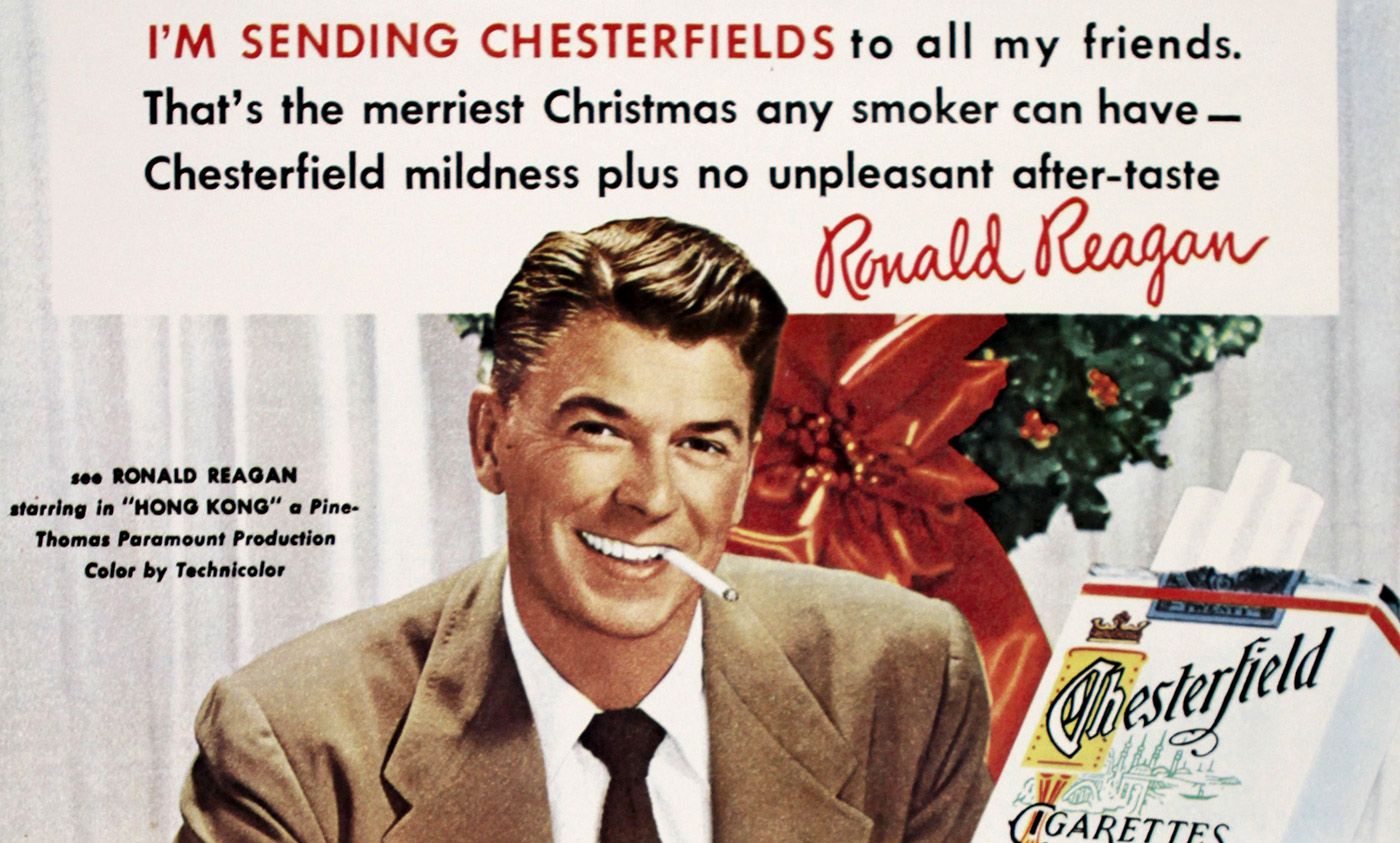
Showing posts with label propaganda. Show all posts

How to tell the difference between persuasion and manipulation

Tuesday, August 7, 2018

What makes an influence manipulative and what makes it wrong are the same thing: the manipulator attempts to get someone to adopt what the manipulator herself regards as an inappropriate belief, emotion or other mental state. In this way, manipulation resembles lying. 

 https://aeon.co/ideas/how-to-tell-the-difference-between-persuasion-and-manipulation

Media Literacy, Bias

Sunday, November 5, 2017

http://www.medialit.org/educator-resources

http://fair.org/take-action-now/media-activism-kit/how-to-detect-bias-in-news-media/

http://fair.org/activism/

https://mediabiasfactcheck.com/

http://fair.org/take-action-now/media-activism-kit/how-to-detect-bias-in-news-media/

http://www.pbs.org/newshour/extra/lessons_plans/decoding-media-bias-lesson-plan/

https://www.nytimes.com/2017/01/19/learning/lesson-plans/evaluating-sources-in-a-post-truth-world-ideas-for-teaching-and-learning-about-fake-news.html

https://www.americanpressinstitute.org/wp-content/uploads/2013/09/highfiveunitB.pdf

Liberals sick of the alt-left are taking 'the red pill'

Thursday, September 28, 2017

The mainstream media failed to see the rise of Donald Trump in 2016. Now it’s overlooking another grassroots movement that may soon be of equal significance— the growing number of liberals “taking the red pill.”  People of all ages and ethnicities are posting YouTube videos describing “red pill moments”—personal awakenings that have caused them to reject leftist narratives imbibed since childhood from friends, teachers, and the news and entertainment media.


http://www.foxnews.com/opinion/2017/09/13/liberals-sick-alt-left-are-taking-red-pill.html


Media Bias & fake news

Saturday, June 17, 2017

How media literacy can help students discern fake news
https://www.youtube.com/watch?v=z4fwJHhv6ZY

How media literacy can help students discern fake news
http://www.pbs.org/newshour/bb/media-literacy-can-help-students-discern-fake-news/ 

Why conservatives might be more likely to fall for fake news
https://www.washingtonpost.com/news/wonk/wp/2016/12/07/why-conservatives-might-be-more-likely-to-fall-for-fake-news/?utm_term=.ac4ee464e053 

Why Fake News Targeted Trump Supporters
 https://www.theatlantic.com/science/archive/2017/02/why-fake-news-targeted-trump-supporters/515433/

Why 'fake news' is now ensnaring liberals
https://www.csmonitor.com/USA/Politics/2017/0207/Why-fake-news-is-now-ensnaring-liberals

Affluent and College-Educated Liberals Most Likely to Fall for the Left’s ‘Fake News’
 http://conservativetribune.com/60-minutes-who-falls-fake-news/

The rise of left-wing, anti-Trump fake news
 http://www.bbc.com/news/blogs-trending-39592010

Liberals Are Just as Guilty of Falling for Fake News as Conservatives

Fake news for liberals: misinformation starts to lean left under Trump 

The left's emerging 'fake news' problem
http://www.businessinsider.com/fake-news-left-liberal-problem-2016-12

Report: Anything That Challenges Your Worldview Is Fake News


iCivics- Media Literacy
https://www.icivics.org/teachers/lesson-plans/propaganda-whats-message

Unlisted video with Brian Dean

The self-disintegration of the Progressive "movement"

Wednesday, April 1, 2015

A political Ouroboros...


Madeleine Albright implied "there's a special place in hell" for young women voters who aren't backing Hillary Clinton
  • http://talkingpointsmemo.com/livewire/madeleine-albright-nyt-special-place-hell-clinton
  • http://thehill.com/blogs/ballot-box/dem-primaries/269329-albright-special-place-in-hell-comment-came-at-wrong-time
  • http://www.nytimes.com/2016/02/08/us/politics/gloria-steinem-madeleine-albright-hillary-clinton-bernie-sanders.html
  • http://www.theamericanmirror.com/albright-special-place-in-hell-for-women-who-dont-support-hillary/
  • http://www.washingtonexaminer.com/albright-theres-a-special-place-in-hell-for-women-who-dont-back-clinton/article/2582614

Gloria Steinem said on Bill Maher's show that young female voters prefer Bernie Sanders to Hillary Clinton because 'the boys are with Bernie'.
  • https://www.washingtonpost.com/news/arts-and-entertainment/wp/2016/02/07/gloria-steinem-is-apologizing-for-insulting-female-bernie-sanders-supporters/
  • http://www.cnn.com/2016/02/06/politics/gloria-steinem-hillary-clinton-bernie-sanders-boys/
  • http://time.com/4211234/gloria-steinem-bernie-sanders-apology/

Saturday, July 7, 2012

From Facebook:

The Right wants to believe they are losing the culture wars because everyone is out to get them. When in reality they are losing because they have thrown away their traditional roots and have been selective about when to apply morality. For example, gay marriage and abortion- they appeal to Natural Law and a higher morality. But on finance, medical coverage, and insurance, the Right makes a 180 degree turn and goes all 'social darwinism' on us.

Because when a single mother needs assistance, Jesus is looking over her shoulder and wagging his finger in disapproval. But when we talk about business ethics of the financial industry, all of a sudden Jesus doesn't exist and we are living in Hobbes's state of nature.

How do we keep people from seeing these inconsistencies? De-fund humanities and language programs- the foundations of a conservative world view.

Are religions ideas really insulated from scrutiny in our culture?

Sunday, March 18, 2012


Do you agree with this? David A. Hollinger of University of California, Berkeley asks whether faith-based politics are given enough scrutiny in American politics. Hollinger writes:

By "giving religious ideas a 'pass' " I refer to the convention of maintaining a discreet silence when one hears a religious idea expressed, no matter how silly it may seem. This convention, which is deeply rooted in the assumption that religion is a private matter, shields religious ideas from the same kind of scrutiny to which we commonly subject ideas about the economy, gender, race, literature, science, art, and virtually everything else...

...Skeptics are expected to refrain from asking the faithful to clarify the epistemic status of the Bible, and from inquiring about the evidentiary basis for the doctrine of the atonement. Arguments within faith communities are allowed (Methodists can challenge one another on whether Paul’s letter to the Romans means that same-sex relationships are contrary to God’s will, Catholics can dispute one another’s opinions about Vatican II, and committed Christians generally can argue over the relevance of the Bible to today’s evolutionary science), but the greater the intellectual distance between the potential critic and the person whose beliefs are at issue, the less socially acceptable it is for the critic to speak candidly.

...When religious ideas are offered as justifications for public policy, those ideas should be subject to the full heat of critical debate. As Harry Truman said in another context, “If you can’t stand the heat, get out of the kitchen.” What would happen if religious ideas were subjected to such a debate? I want to conclude with some speculations. A robust, critical discussion of religious ideas might encourage popular faiths more consistent with modern standards of plausibility, more conscious of the historicity of all faiths, and more resistant to the manipulation of politicians belonging to any party.

The learned elites of the United States have been too reluctant to honestly engage the American public on the religious grounds that continue to be important in this society, which is by far the most religious in the industrialized North Atlantic West.

A forthright, public debate about religious ideas might reveal that the most important religious divide in the United States today is not between secularists and believers, but between two rather differently constituted parties:

1) a broad dispersion of secularists and classically liberal Protestants, Catholics, Jews, and Muslims and 2) a variety of fundamentalist and evangelical believers whose understanding of scripture, divinity, and science remain oblivious to the critical spirit of the Enlightenment.

Perhaps the salient solidarities are not communities of faith and of unbelief, but of people adhering to modern structures of cognitive plausibility and of people rejecting those structures.

(The above text is excerpted from "Civic Patriotism and the Critical Discussion of Religious Ideas" by David A. Hollinger. Published by Center for American Progress, 2008.)

What do you think? I have my likes and dislikes about his ideas- I'm wondering if anyone else will key in on the same ones.

I'm not sure where David Hollinger thinks there is a "discreet silence" being kept regarding religious ideas when the truth of Christian claims and the reliability of Christian scriptures are constantly being debated in the media. (Hitchens and Dawkins are like rock stars.) Plus, he is a professor at Berkeley, a place where people usually have no problem expressing their skepticism of traditional beliefs.

I also don't know why skeptics should refrain from asking the faithful to clarify certain points of belief. I think that is only natural and should be welcomed. If someone does not elaborate on a religious idea because they think it is silly, I would interpret that as simply being respectful.  At some point everyone finds something silly in another belief system (and sometimes even in their own!); it only seems polite to not make a public spectacle out of it. Let's not agonized over points of disagreements at the expense of enjoying each others' company.

I would take Hollinger's idea a step further:  I feel that the Christian conservatives are not prepared for skeptical dialogue.  Because it is  too easy to turn inward and be exclusive, it simply doesn't happen enough. To illustrate my point, the authors I mentioned above, Hitchens and Dawkins, are almost unknown in Christian circles.  Then one day the young people encounter the New Atheists and learn they have not been prepared. Oh, they know more than enough about conservative politics but they discover that being a staunch political conservative has done nothing to help them defend their faith in the public arena. So I agree with Hollinger that more skepticism is a good thing.

David A. Holling (of University of California, Berkeley) argues that rigorous scrutiny of faith-based politics might reveal that the real division in the United States is not between secularists and believers, but between the following two parties:

"1) a broad dispersion of secularists and classically liberal Protestants, Catholics, Jews, and Muslims and 2) a variety of fundamentalist and evangelical believers whose understanding of scripture, divinity, and science remain oblivious to the critical spirit of the Enlightenment."

This is where I disagree with Holling.  His characterization of religious groups in America is too simplistic.  He has conveniently made fundamentalist and evangelical Christians the great anti-intellectual obstacle that impedes progress in America, while the rest of us all work easily together.  Evangelical Christianity is too diverse in both politics and in their views on spirituality. In fact over the past 10 years international NGOs have seen increased interest and support from evangelical Christians, an area typically dominated by the political left.  He suggests that "fundamentalist and evangelical believers" have the monopoly on being "oblivious to the critical spirit of the Enlightenment." Most would agree that there are Catholic, Jewish, and Muslim groups that fall in this category too.  Though it is fair to point out that Jewish and Muslim groups of this kind will still identify with the left out of a mistrust of the religious right's political influence.

There is the sentiment in the United States that if Christianity is properly understood one will feel obligated to throw their lot in with the Republican Party.  Partly for this reason the Republican Party is highly identified with evangelical Christianity.  Perhaps this is what Holling is talking about in the first place; that social conservatism seems to alienate just about every other religious belief, regardless of how conservative they might actually be. Still, those reactionaries actually opposed to scientific and enlightenment thought are way too few to affect policy on a national level.  I believe it is the case that faith based politics has an appeal to a wider spectrum of belief, including nominal church goers and "paleo-conservatives" (i.e those who might even be skeptics yet value the place of traditional institutions).

I believe we will actually see greater skepticism of faith-based politics come from traditionalist Christians in the coming years (at least on certain issues), but that's too much to go into here.

Bizarre CNN report on Tax Day Tea Parties

Saturday, April 16, 2011

Check out this bizarre report on one of the Tea Party locations. First of all, the participants were not unwashed masses duped by a slick "right wing" campaign.

The idea simply went viral. Regardless of how involved Fox may have been in the organization, it resonated with a substantial number of Americans. More specifically, the reporter could not detach herself emotionally from the issue, and she could not, or was unwilling to see there is a legitimate concern about the long term effects of the stimulus packages.

I absolutely love hearing regular folks on the street articulate historic American principles, and this guy was doing it well, and it was heart-felt. But she had to shut him down.


This tactic is called "framing the issue" but once she got to "anti government" it turned into a blatant lie. "Propaganda" would be a nice word for it. At the end she says "this is not family viewing." No, legitimate and peaceful free speech is okay... as long as it is anti-Republican. This was an absolute abuse of the reporter's profession.

She wanted those people to be unthinking, troglodytes. She wanted them to be anti-government rednecks. But she didn't like the fact that the man had a cogent idea ready to be expressed.

How DARE you quote Lincoln!

Did you notice she said "the State of Lincoln?" Is this a new metaphor for the administration, or perhaps a new term coined by the Left in order to romanticize themselves? Maybe not. Hard to tell. I don't want to build a mountain out of this molehill but that still brings up a tactic used by the Left.

The Left will heavily use certain terms with the hope that everyone will associate such positive terms with their policies (as does the Right, i.e. the "Freedom to Farm" bill benefitted global ag conglomerates). For example, they started calling themselves "progressive" and now that term is associated with the Democratic side. The implication is that if you are not on their team, you are not progressive- you are therefore REgressive and backward. It is propaganda through semantics, and I feel it is dishonest.

Conservatives should have called them on this a long time ago, but they were asleep at the wheel, too busy worrying about one world government and conspiracies, while the entire time the liberal left was working on getting themselves written into history books as "progressives." Conservatives need to realize that this semantic game is far more powerful and far more insidious than international organizations.

The intention is that, in the long run, such language will get written into US history. When later generations read "progressive" (and maybe even "State of Lincoln") in history books, it will color their interpretation of our time period in favor of one political agenda and by then the fact of a semantic game won't matter any more. History will have been written, and you won't be there to balance out the story.

Does this historical manipulation really work? I mean, does this kind of political opportunism really affect how future generations view history? I can give you a perfect example. Consider the following quote by Confederate Major General Patrick Cleburne:

...It is said slavery is all we are fighting for, and if we give it up we give up all. Even if this were true, which we deny, slavery is not all our enemies are fighting for. It is merely the pretense to establish sectional superiority and a more centralized form of government, and to deprive us of our rights and liberties.

So Cleburne proposed that Black men be conscripted as soldiers to help supplement the dwindling Confederate army. This wasn't the first time such an idea was put forth, but "conservatives" during the Civil War were too busy being loyal to ideas of aristocracy, and Cleburne made this historic prediction regarding how their failure to address the bigger need allowed someone else to determine how the South would be remembered:

...It means the history of this heroic struggle will be written by the enemy; that our youth will be trained by Northern schoolteachers; will learn from Northern school books their version of the war; will be impressed by the influences of history and education to regard our gallant dead as traitors...

The result? Slavery is now the official reason why the South fought the Civil War. Hundreds of thousands of Southern men fought, were maimed, endured POW camps- all just to “keep the black man down.” Not only did it color our modern interpretation of history, but also fuels the rise of an entire academic field that says "hundreds of thousands of Confederate veterans either remembered everything wrong or they passed on false information; and those Confederate soldiers with non-racist motives were forced to fight against their will."

Examples of Intolerance and the use of Rhetoric from the Political Left

Thursday, July 15, 2010

The Keene Sentinal reports that a conservative Catholic group, the Saint Benedict Center of Richmond, New Hampshire, has won a $1.15 million settlement over the town’s unconstitutional zoning restrictions.

The case stemmed from the center's proposal to build a 10,000-square-foot school and chapel on its Fay Martin Road property. After a series of hearings, Richmond's zoning and planning boards approved the plan, but attached a list of 30 conditions the center had to complete to build.

In October 2009, Cheshire County Superior Court Judge Philip P. Mangones ruled it would be impossible to meet all those conditions, and that meant the center was being denied its constitutional rights under the Religious Land Use and Institutionalized Persons Act.

Unnecessarily difficult administrative obstacles such as this were used in the South in order to prevent and frustrate building and community projects initiated by African Americans. What this blog post intends to focus on however are the issues of speech and belief.
According to the The Alliance Defense Fund, which defended the group, the judgment compensates the Saint Benedict Center "for years of unconstitutional restrictions that made it impossible to finish the construction of its church and school building." The Alliance Defense Fund is a firm which seeks to defend conservative issues in litigation, so its reporting deserves some scrutiny, more than this author has time for. Still, the ADF reports the following

Those who see themselves as the paragon of inclusion and tolerance are not above human frailty, especially when they have the power to engineer the society it desires. Between these two articles, one is given the impression (perhaps accurately?) that a left-leaning local culture has used its administrative power to frustrate the efforts of a conservative religious group. With their use of the word "abhorrent" this would be a perfect example of how liberal activist culture uses morally charged language to demonize anyone who disagrees with them, especially those that espouse strong social morals.

"Abhorrent" is used merely for its emotional and propaganda value. The word "progressive" has been used in the same way to the extent that its true meaning has been lost. Since even the political Left will apply double standards in favor of promoting its agenda (one of pseudo-tolerance), it can be said that it (the liberal side of the political spectrum) is not the inheritor of Bill of Rights' legacy or the civil rights movement, much less their guardian.

It would have been impossible for the Bill of Rights and our legal system to have emerged from such a political mentality (where religious groups are held to a litmus test) had it existed 200 years ago.

I teach them all the good I can, and recommend them to others from whom I think they will get some moral benefit. And the treasures that the wise men of old have left us in their writings I open and explore with my friends. If we come on any good thing, we extract it, and we set much store on being useful to one another. - Socrates, Memorabilia


What we maintain is that in none of the problems of life can men afford to lose sight of the storehouse bequeathed to them by the ancients. In the complexus of everything which differentiates man from the brute creation, the voice of antiquity must be heard...

-H. Browne, quoted in "Classics and Citizenship" The Classical Quarterly, 1920